 EN
EN

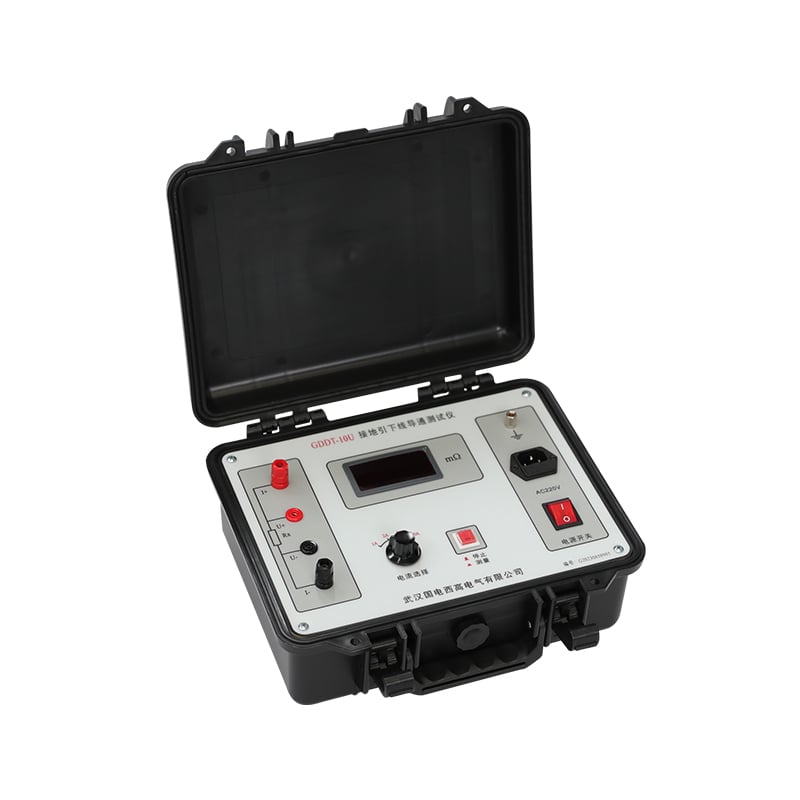
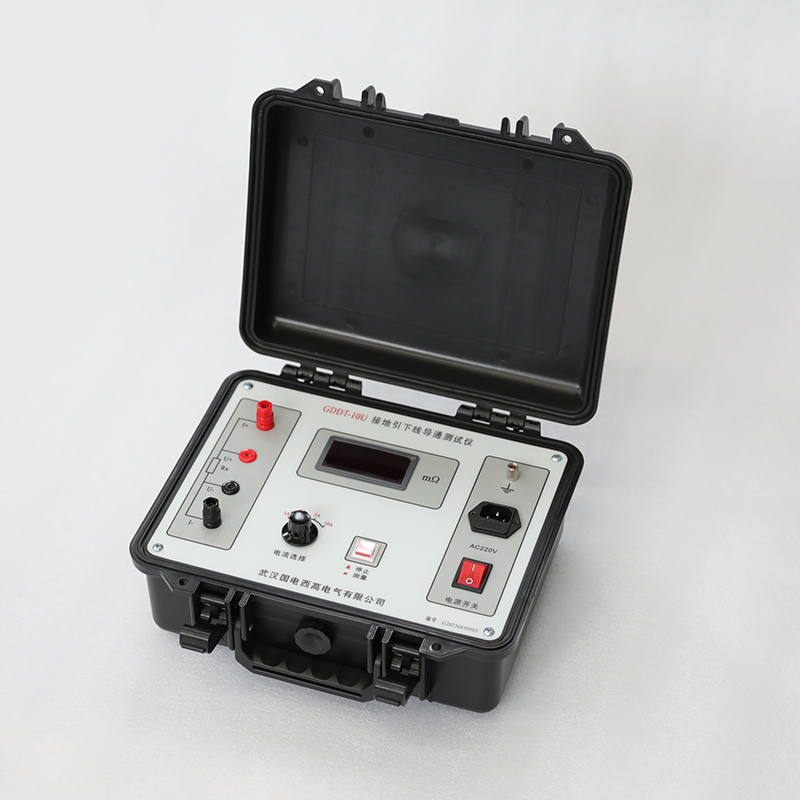
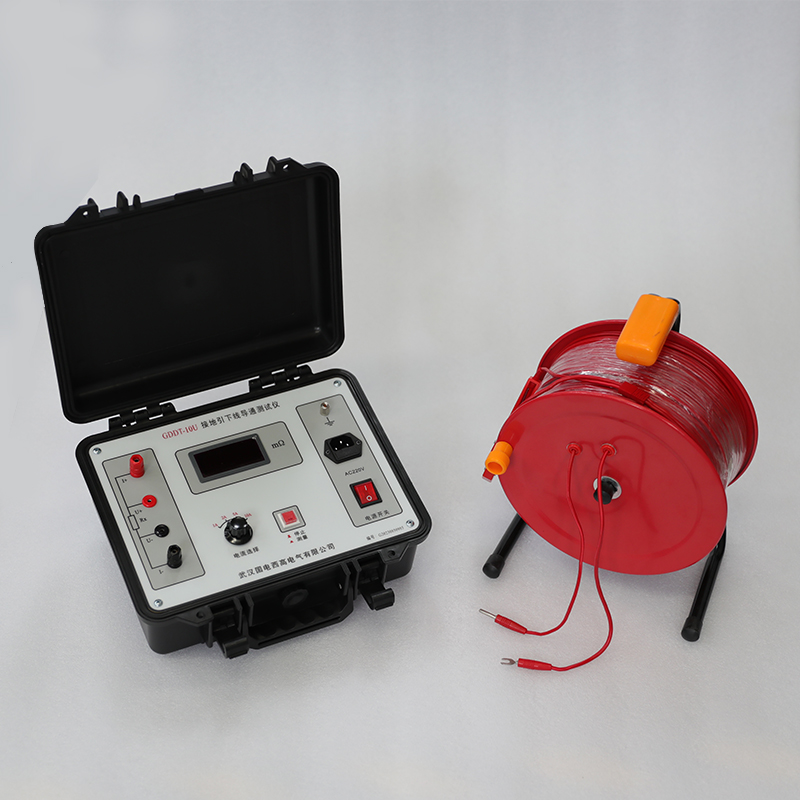
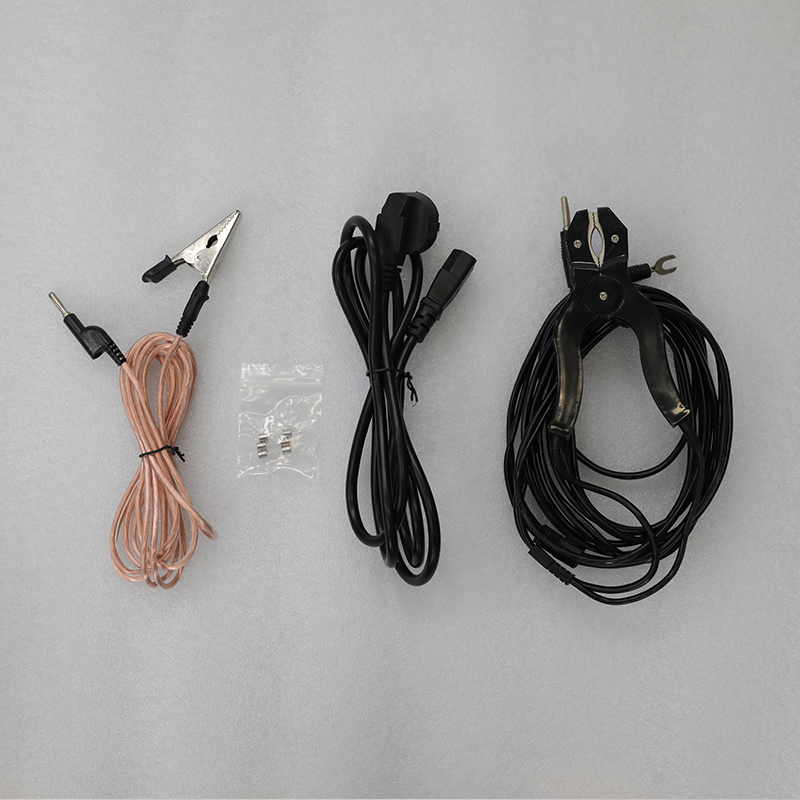
ECR-10B Portable Earth Continuity Resistance Tester
ECR-10B Digital Intelligent Earth Continuity Resistance Tester with 10A AC Constant Current Output, 4-Wire Kelvin Measurement, Automatic Pass/Fail Alarm, for Protective Earthing Continuity and Equipotential Bonding Resistance Inspection.
- Description
- Specifications
- Applications
- Advantages
- FAQ
- Recommended Products
Description
ECR-10B is a professional benchtop earth continuity resistance tester developed for safety laboratory verification, factory end-of-line quality inspection and on-site acceptance test. It adopts 4-wire Kelvin measurement principle to eliminate lead wire resistance error, equipped with 10A AC constant test current, which meets the mandatory safety test requirements for protective earthing continuity of Class I electrical equipment.
The instrument accurately measures bonding resistance between equipment metal enclosure and protective earth terminal, as well as contact resistance of equipotential connections, grounding down conductors, welding joints and busbar connections. Users can set upper resistance threshold; the unit automatically triggers sound-light pass/fail judgment after measurement. It supports continuous timing output, real-time display of resistance value and test current. Built-in over-current, over-temperature and short-circuit protection ensures stable long-time operation for batch production lines.
Specifications
| Parameter | Specification |
|---|---|
| Measurement Principle | 4-Wire Kelvin (four-terminal) method |
| Test Current | AC 10A constant current (50Hz) |
| Resistance Measuring Range | 0.000mΩ ~ 2000mΩ |
| Resolution | 0.001mΩ |
| Basic Accuracy | ±(0.5% reading + 0.003mΩ) |
| Test Timing Range | 1s ~ 999s adjustable, continuous manual mode |
| Judgment Function | User-set threshold, automatic sound-light PASS/FAIL alarm |
| Display | Dual digital LED, resistance & current simultaneous display, CN/EN bilingual |
| Communication | Optional RS485 interface |
| Protection Functions | Short-circuit, over-current, over-temperature, soft start |
| Input Power Supply | AC 220V±10%, 50Hz |
| Operating Temperature | 0℃ ~ +40℃ |
| Ambient Humidity | ≤80% RH (non-condensing) |
| Enclosure | Metal benchtop industrial chassis |
Applications
Core Test Objects
- Class I household electrical appliances, power tools, welding equipment
- Electrical control cabinets, distribution boxes, charging piles
- Metal enclosure protective earthing connection points
- Equipotential bonding, grounding down leads, busbar welding contacts
- Cabinets, racks, metal frames in data centers and communication rooms
Typical Application Scenarios
- Electrical appliance manufacturers: production line safety end-of-line testing
- Equipment manufacturers: type test & factory quality inspection
- Third-party testing laboratories: safety certification verification
- Power & data center operators: grounding system on-site acceptance
- Automotive new energy industry: charging equipment ground continuity inspection
Advantages
4-wire Kelvin anti-interference measurement
Eliminate lead resistance error, guarantee accurate mΩ-level low resistance measurement
Standard 10A AC constant current
Match mainstream safety test specifications for Class I equipment protective earthing test
Built-in automatic pass/fail alarm
Suitable for assembly line batch testing, improve detection efficiency and reduce human judgment error
Timed constant current output
Support holding test as required by standards, simulate real fault current condition
Industrial-grade continuous operation capability
Effective heat dissipation and multi-layer protection, stable for long-time batch production testing
Optional communication for automated production
Can be integrated into automatic test platform to realize unmanned inspection
FAQ
Q: Why adopt 4-wire Kelvin method instead of ordinary two-wire measurement?
A: In two-wire mode, the resistance of test cables and clip contact resistance will be included in reading, causing large error for mΩ-level measurement. The 4-wire method separates current loop and voltage sampling loop, completely eliminates lead resistance interference to obtain true bonding resistance of the test point.
Q: What is the typical resistance acceptance limit for ground continuity test?
A: According to GB and IEC standards, the resistance between Class I equipment metal enclosure and protective earth terminal generally shall not exceed 0.1Ω. Users can set corresponding threshold value according to target product specification.
Q: Difference between earth continuity tester and DC micro-ohmmeter?
A: ECR-10B outputs AC 10A test current, consistent with safety standard test requirements for protective earthing; DC micro-ohmmeter is mainly for winding DC resistance. Test current type and magnitude are different, cannot be substituted for safety certification test.
Q: Can it be used for on-site power grid grounding connection inspection?
A: Yes. It can test continuity resistance of grounding down conductors, metal equipotential bonding strips and welding joints. Note that all test objects must be power-off before measurement.