 EN
EN

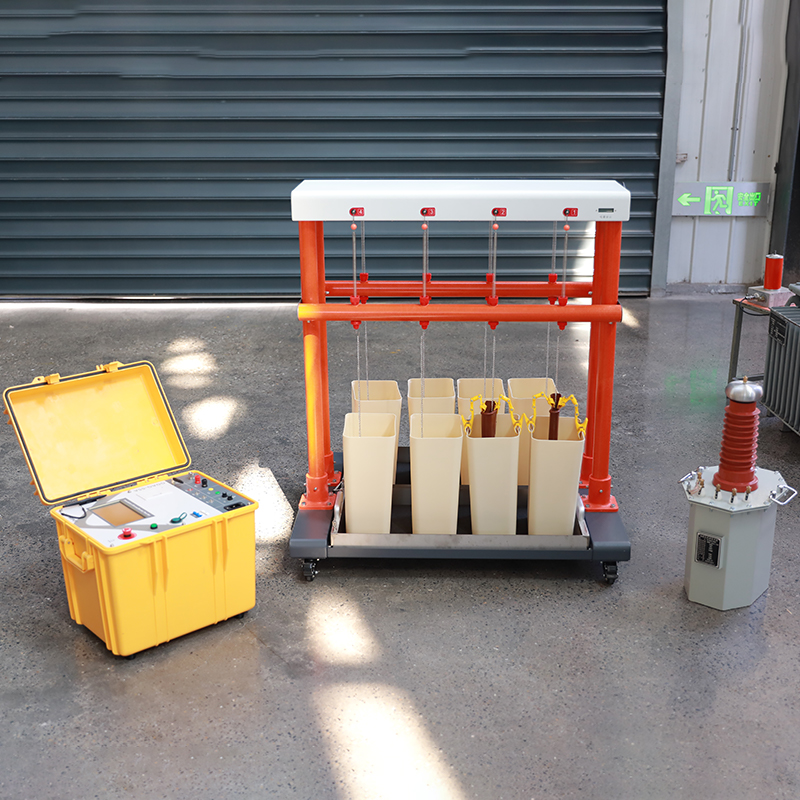
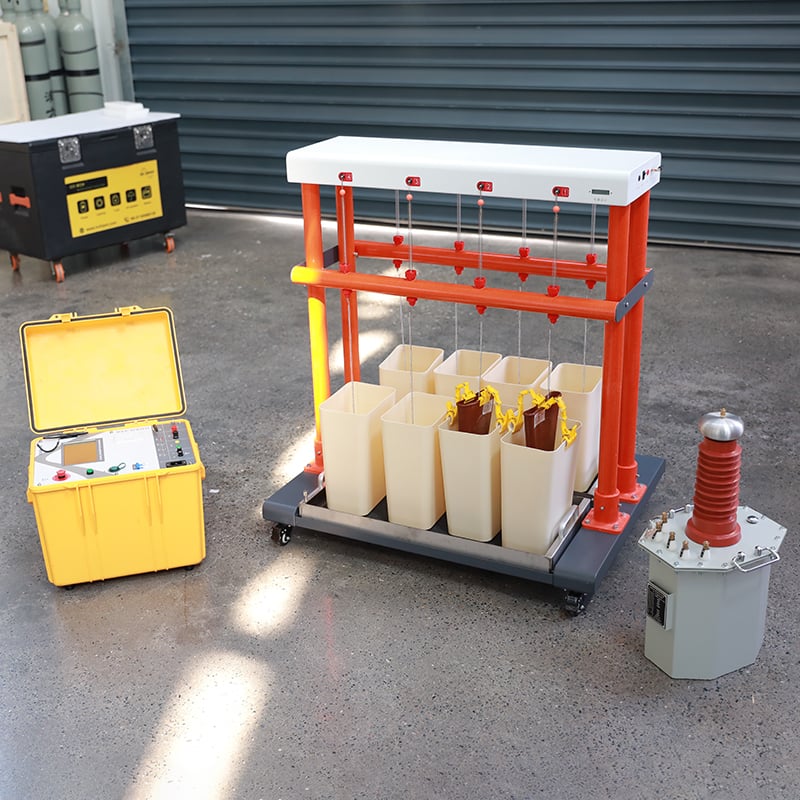
GDJS-85C Intelligent Insulating Gloves & Boots Withstand Voltage Test Device
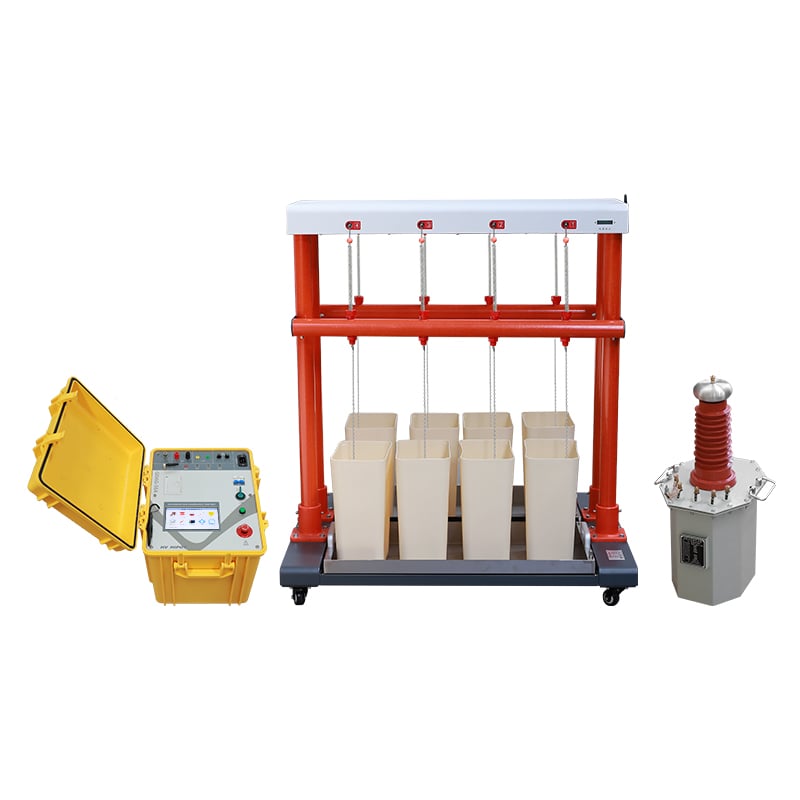
GDJS-85C Digital Intelligent Insulating Gloves & Boots Power Frequency Withstand Voltage Test Device with 8 Independent Stations, Leakage Current Monitoring, Automatic Test Process, for Electrical Safety PPE Routine Preventive Test
- Description
- Specifications
- Applications
- Advantages
- FAQ
- Recommended Products
Description
GDJS-85C is a cost-effective intelligent insulating safety PPE withstand voltage test device designed for power frequency withstand voltage and leakage current test of insulating gloves and insulating boots in small and medium substations, industrial enterprises, property management and third-party testing institutions. It strictly complies with DL/T 1476-2023, GB/T 17622-2008 and GB 21148-2020 standards, adopting standard wet immersion test method and independent per-channel measurement & trip system that ensures accurate test results and reliable safety protection.
The instrument features 8 independent test stations that can test 8 pieces of gloves or boots simultaneously, significantly improving test efficiency compared to single-station testers. Its 0~30kV continuously adjustable high-voltage output and 0~20mA per-channel leakage current measurement cover all mainstream insulating gloves (Class 00~Class 2) and insulating boots (6kV~20kV). The fully automatic test process automatically completes voltage rise, constant voltage timing, voltage drop and result judgment, eliminating manual operation errors and reducing operator skill requirements.
Specifications
| Parameter | Specification |
|---|---|
| Compliance Standards | DL/T 1476-2023, GB/T 17622-2008, GB 21148-2020, DL/T 976-2017, DL/T 848.2-2018 |
| Test Stations | 8 independent stations |
| Rated Output Voltage | 0 ~ 30kV AC, continuously adjustable |
| Rated Capacity | 3kVA |
| Input Power | AC 220V±10%, 50Hz±2Hz |
| Input Current | 0 ~ 14A |
| Leakage Current Range | 0 ~ 20mA AC per channel |
| Leakage Current Resolution | 0.1mA |
| Leakage Current Accuracy | ±2% FS |
| Voltage Measurement Accuracy | ±2% FS |
| Timing Range | 0 ~ 999s (adjustable) |
| Timing Accuracy | ±0.2s |
| Trip Mode | Independent per-channel auto-trip when leakage current exceeds limit or breakdown occurs |
| Test Method | Standard wet immersion test method |
| Display | High-brightness LCD display + physical keys |
| Data Storage | 200 groups (with time stamp and test parameters) |
| Protection Functions | Over-voltage, over-current, breakdown trip, zero-position start, emergency stop |
| Alarm Mode | Sound and light alarm |
| Test Barrel Material | High-strength insulating engineering plastic |
| Operating Temperature | -10℃ ~ +50℃ |
| Humidity | ≤85% RH (non-condensing) |
| Overall Dimensions (L×W×H) | 850×550×1050mm (integrated type) |
| Total Weight | ~80kg (including test transformer and control unit) |
| Enclosure | Cold-rolled steel spray + insulating test barrels |
Applications
Core Test Objects
- Insulating gloves: Class 00, Class 0, Class 1, Class 2 insulating gloves for live working
- Insulating boots & shoes: 6kV, 10kV, 15kV, 20kV insulating boots and dielectric safety shoes
- Other insulating PPE: Insulating sleeves, small insulating tools (with optional fixtures)
Typical Usage Scenarios
- Power supply stations: Substation and power supply bureau safety PPE routine preventive test (every 6 months)
- Industrial enterprises: Internal electrical safety tool regular inspection and maintenance
- Property & building maintenance: Daily safety inspection of electrician tools
- Third-party testing institutions: Entry-level safety PPE certification testing and calibration services
- Safety tool manufacturers: Factory incoming inspection and batch sampling test
Advantages
Compliance with Latest Industry Standards
Fully meets DL/T 1476-2023, GB/T 17622-2008, GB 21148-2020 → test results comply with national safety regulations and meet daily preventive test requirements
High Cost-Effective 8-Station Design
Simultaneous testing of 8 samples, independent trip per channel → improves test efficiency by 200% compared to single-station testers, with only 40% of the cost of high-end models
Fully Automatic Intelligent Test Process
One-click to complete the entire test, automatic pass/fail judgment → eliminates manual operation errors, reduces operator skill requirements and training costs
Independent Per-Channel Trip Protection
Faulty channel automatically cuts off without affecting other stations → avoids repeated wiring caused by single sample breakdown, improves test continuity
Multi-Level Comprehensive Safety Protection
Zero-position start + over-voltage/over-current protection + emergency stop → ensures operator safety during high-voltage tests, eliminates electric shock hazards
Compact & Durable Design
Integrated structure, small footprint, corrosion-resistant test barrels → suitable for both fixed laboratory and mobile on-site tests, easy to maintain
FAQ
Q: How does the independent per-channel trip function work?
A: Each of the 8 test stations has an independent current detection and trip mechanism. When the leakage current of any station exceeds the set threshold or breakdown occurs, the high voltage of that station is automatically cut off immediately, while the other 7 stations continue to test normally. This avoids the situation where one faulty sample causes the entire test to stop, significantly improving test efficiency.
Q: What is the test cycle for insulating gloves and boots according to standards?
A: According to DL/T 1476-2023 Preventive Test Code for Electric Safety Tools, insulating gloves and insulating boots must undergo power frequency withstand voltage test every 6 months. The test voltage and leakage current limit vary for different voltage classes. GDJS-85C pre-stores common standard limit values and automatically judges pass/fail according to the selected sample type.
Q: Can GDJS-85C test both insulating gloves and insulating boots?
A: Yes. GDJS-85C is equipped with special electrodes for both insulating gloves and insulating boots, and supports switching between two test modes. Users only need to select the corresponding sample type in the menu, and the instrument will automatically call the corresponding test parameters and standard limits.