 EN
EN

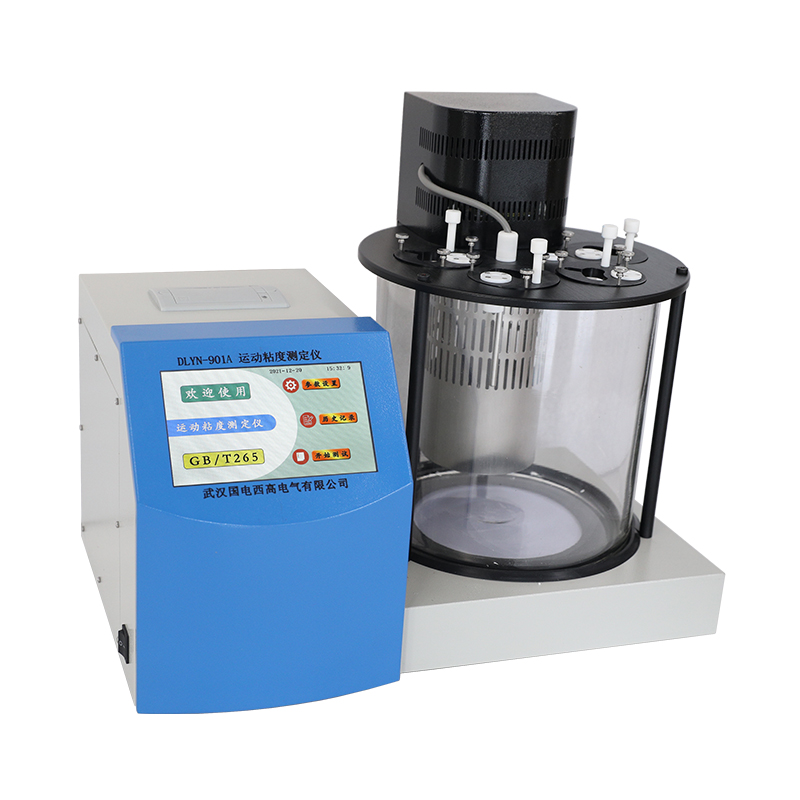
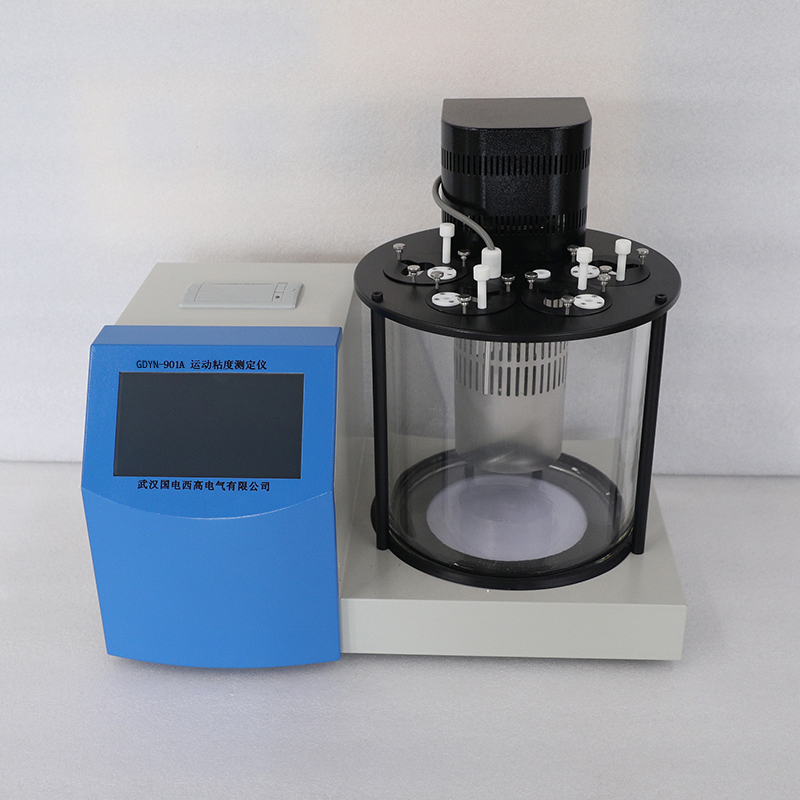
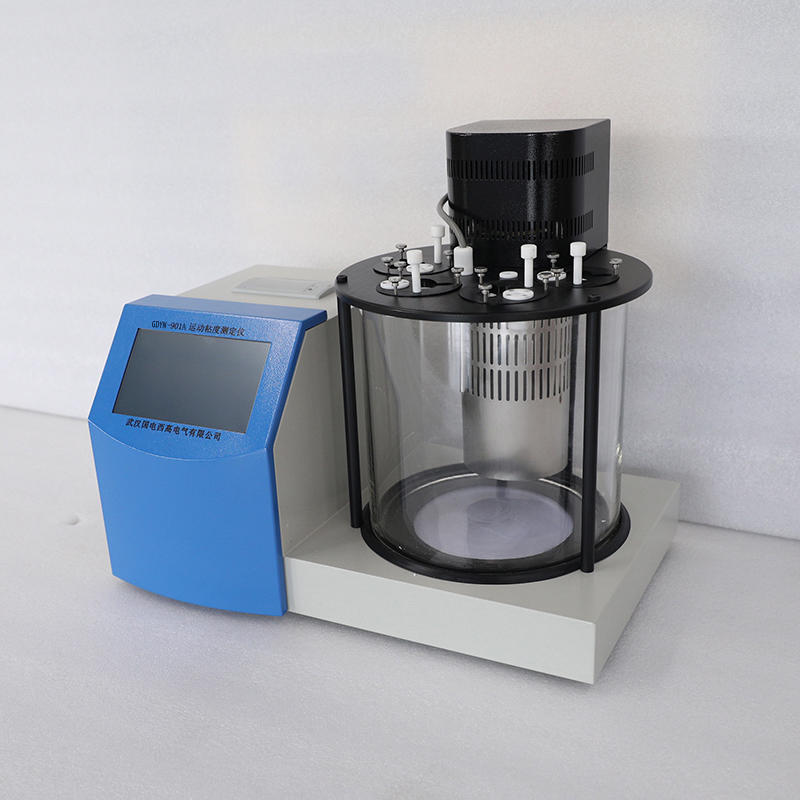
GDYN-901A Kinematic Viscosity Tester (4-Sample Simultaneous Test)
GDYN-901A Digital Intelligent Kinematic Viscosity Tester with 4 Independent Test Stations, PID Temperature Control, Imported PT100 Sensor, Automatic Viscosity Calculation, for Petroleum Products Viscosity Measurement.
- Description
- Specifications
- Applications
- Advantages
- FAQ
- Recommended Products
Description
The GDYN-901A is a professional-grade, high-throughput fully automatic kinematic viscosity testerexclusively designed for low temperature fluidity assessment of insulating oils, lubricating oils, fuel oils and other petroleum products in power systems and petrochemical industries. It fully complies with GB/T 265-1988, ISO 3104:2023 and ASTM D445-2024 standards, adopting the internationally recognized capillary gravity method that provides accurate and reliable measurement results.
The instrument features four independent test stations that allow simultaneous testing of four different samples or parallel samples, greatly improving test efficiency. Its innovative PID intelligent temperature control algorithm strictly maintains the bath temperature within ±0.05℃, ensuring consistent test conditions. The imported PT100 platinum resistance temperature sensor provides high-precision temperature measurement, while the built-in high-speed stirring system ensures uniform temperature distribution in the constant temperature bath.
Specifications
| Parameter | Specification |
|---|---|
| System Parameters | |
| Compliance Standard | GB/T 265-1988, ISO 3104:2023, ASTM D445-2024, DL/T 429.4-2016 |
| Test Principle | Capillary gravity method |
| Test Stations | 4 independent test stations |
| Operation Mode | Fully automatic one-click test |
| Display | 7-inch 800×480 color touch screen |
| Data Storage | 500 groups test results |
| Data Export | USB 2.0 (Excel format) |
| Printer | High-speed thermal printer, 58mm paper width |
| Temperature Parameters | |
| Temperature Range | Room temperature ~ 110℃ |
| Temperature Control Accuracy | ±0.05℃ |
| Temperature Resolution | 0.01℃ |
| Temperature Sensor | Imported PT100 platinum resistance (A grade) |
| Temperature Uniformity | ≤0.05℃ in working area |
| Heating Power | 1800W (main) + 800W (auxiliary) |
| Stirring Motor Power | 25W |
| Test Parameters | |
| Test Times | 1~6 times per sample (adjustable) |
| Timing Range | 0.0s ~ 9999.9s |
| Timing Accuracy | ±0.1s |
| Calculation Items | Kinematic viscosity (mm²/s), Dynamic viscosity (mPa·s) |
| Constant Temperature Bath | |
| Material | Stainless steel |
| Volume | ~15L |
| Cooling Medium | Water (<90℃) or glycerin (≥90℃) |
| Power Supply | |
| Input Power | AC 220V±10%, 50Hz |
| Power Consumption | ≤1800W |
| Physical Parameters | |
| Dimensions | 500×450×650mm (L×W×H) |
| Weight | ~25kg (including all components) |
| Housing | Cold-rolled steel with electrostatic spraying |
| Protection Grade | IP40 |
| Operating Temperature | 5℃ ~ +40℃ |
| Storage Temperature | -20℃ ~ +60℃ |
| Humidity | ≤85% RH (non-condensing) |
Applications
Core Test Objects
- Power industry oils: Transformer oil, switch oil, capacitor oil, cable oil, turbine oil
- Petrochemical industry oils: Lubricating oil, hydraulic oil, gear oil, fuel oil, diesel oil
- Other petroleum products: Asphalt, paraffin wax, petroleum resin
Typical Usage Scenarios
- Power companies: Transformer preventive maintenance, insulating oil regular testing, low temperature performance assessment
- Transformer manufacturers: Factory quality control, type tests, after-sales service
- Oil treatment companies: Insulating oil regeneration quality inspection, oil treatment effect evaluation
- Petrochemical enterprises: Product quality inspection, raw material testing, production process control
- Third-party testing institutions: Oil quality testing, performance assessment, quality arbitration
Advantages
Compliance with Latest International Standards
Fully meets GB/T 265-1988 Chinese national standard, ISO 3104:2023 international standard and ASTM D445-2024 American standard → test results are recognized worldwide
Industry-Leading ±0.05℃ Temperature Control Accuracy
Advanced PID algorithm and imported PT100 sensor, uniform temperature distribution in the bath → ensures accurate and repeatable test results
4-Sample Simultaneous Test Design
Can test four samples simultaneously, improving test efficiency by 300% → saves time and labor costs for high-volume testing
Intelligent Automatic Data Processing
Automatically removes abnormal data and calculates average value → eliminates human errors and ensures result reliability
Comprehensive Data Management Function
500 groups data storage, USB export and automatic printing → simplifies data management and report generation
Durable & Reliable Construction
Stainless steel constant temperature bath, rugged cold-rolled steel casing → long service life, suitable for long-term laboratory use
FAQ
Q: What is the principle of capillary gravity method for kinematic viscosity testing?
A: The principle is based on measuring the time required for a fixed volume of liquid to flow through a calibrated glass capillary tube under the action of gravity. The kinematic viscosity (ν) is calculated by multiplying the flow time (t) by the capillary constant (C) of the viscometer: ν = C × t. The unit of kinematic viscosity is mm²/s (centistokes, cSt). The dynamic viscosity (η) can be obtained by multiplying the kinematic viscosity by the density (ρ) of the liquid at the test temperature: η = ν × ρ.
Q: How long does a typical test take?
A: The test time depends on the viscosity of the sample and the test temperature. For transformer oil tested at 40℃, the flow time is usually between 200~300 seconds. With 4 test times per sample, the complete test including heating to test temperature, constant temperature, timing and calculation takes approximately 30~40 minutes. For 4 samples tested simultaneously, the total test time is the same as for one sample.
Q: Can it test both transparent and opaque oil samples?
A: Yes. GDYN-901A uses an optical detection system that can accurately detect the flow of both transparent and opaque oil samples through the capillary tube. It is suitable for testing all types of petroleum products including light-colored transformer oil and dark-colored heavy fuel oil.
Q: How to calibrate the instrument?
A: The instrument is calibrated using standard viscosity oils with known kinematic viscosity values. Users can test the standard oil at a specified temperature, compare the measured value with the standard value, and adjust the calibration coefficient if necessary. The calibration procedure is simple and fast, and the instrument provides a built-in calibration wizard to guide users through the process.