 EN
EN

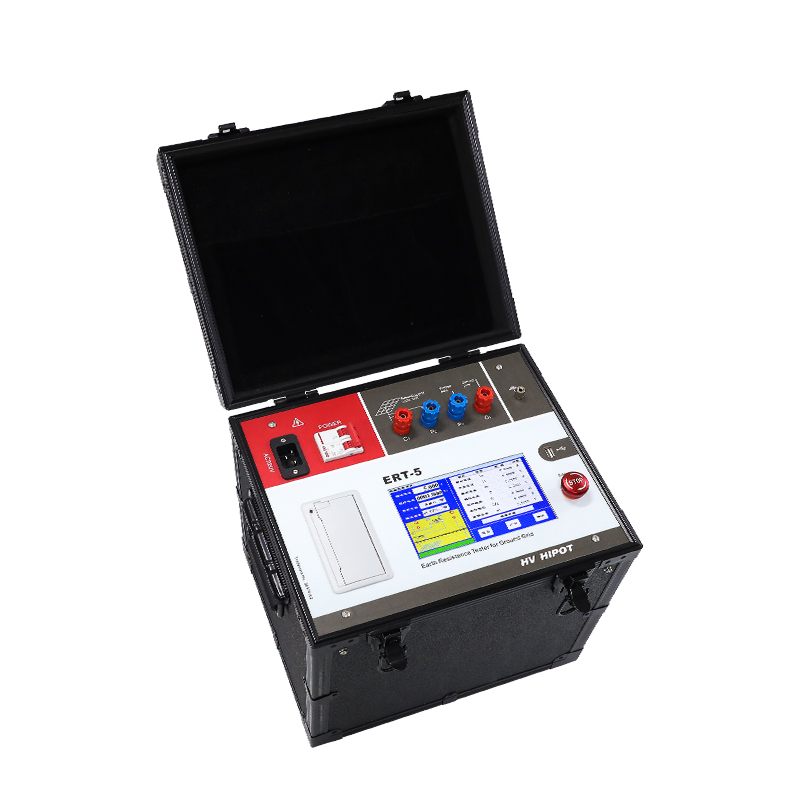
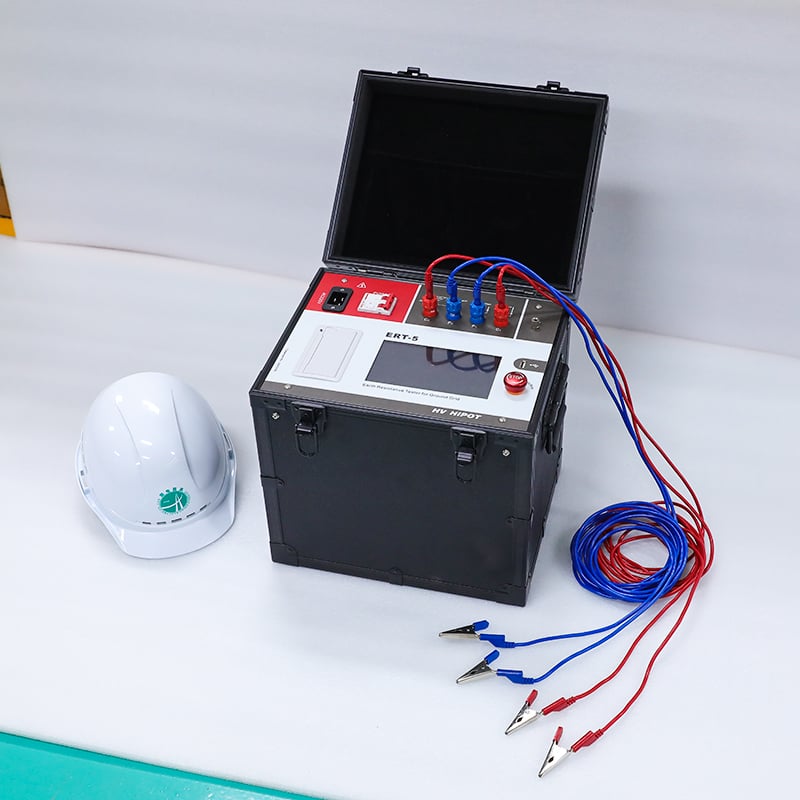
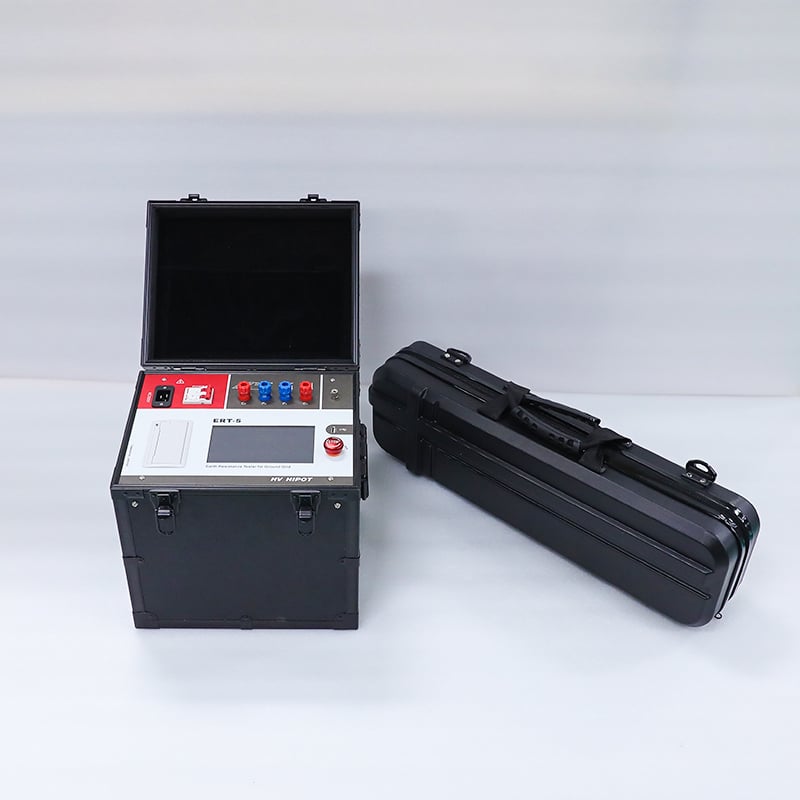
ERT-5 Large-Scale Ground Grid Earth Resistance Tester
ERT-5 Digital Intelligent Large-Scale Ground Grid Earth Resistance Tester with 5A High-Current Output, Dual-Frequency Anti-Interference, Step & Touch Voltage Measurement, for Substation & Power Plant Grounding System Evaluation.
- Description
- Specifications
- Applications
- Advantages
- FAQ
- Recommended Products
Description
ERT-5 is a professional flagship large-scale ground grid earth resistance tester designed for comprehensive evaluation of grounding systems in 110kV~1000kV substations, power plants, large industrial plants and wind farms. It strictly complies with DL/T 475-2017, GB/T 17949.1-2000 and IEC 61557-5:2019 standards, adopting advanced dual-frequency synchronous measurement technology that effectively suppresses 50Hz/60Hz power frequency interference, ensuring accurate measurement results even in strong electromagnetic environments of 500kV and above substations.
The instrument features 5A high-current output and 400V maximum open-circuit voltage, enabling accurate measurement of large-area ground grids with high soil resistivity. It supports comprehensive test functions including ground resistance, ground impedance, soil resistivity (Wenner four-pole method), step voltage, touch voltage and ground potential rise. The 7-inch high-definition color touch screen provides intuitive operation and real-time display of test curves and data.
Specifications
| Parameter | Specification |
|---|---|
| Compliance Standards | DL/T 475-2017, GB/T 17949.1-2000, IEC 61557-5:2019, IEEE Std 80-2013 |
| Test Principle | Dual-frequency synchronous current-voltage method |
| Test Frequencies | 45Hz/55Hz automatic dual-frequency conversion |
| Output Current | 0~5A DC continuously adjustable |
| Maximum Open-Circuit Voltage | 400V DC |
| Ground Resistance Range | 0.001Ω ~ 5000Ω |
| Resistance Resolution | 0.001Ω |
| Resistance Accuracy | ±(2% of reading + 0.005Ω) |
| Soil Resistivity Range | 0.01Ω·m ~ 9999kΩ·m |
| Voltage Measurement Range | 0 ~ 200V AC/DC |
| Voltage Accuracy | ±(1% of reading + 0.01V) |
| Test Modes | Three-pole method, four-pole method, potential drop method, current-voltage method |
| Test Functions | Ground resistance, ground impedance, soil resistivity, step voltage, touch voltage, ground potential rise |
| Display | 7-inch 800×480 color capacitive touch screen |
| Language Support | Chinese / English bilingual |
| Data Storage | 2000 groups test data + curves |
| Communication Interface | USB 2.0 (data export) |
| Report Generation | One-click Word format report |
| Power Supply | AC 220V±15%, 50Hz±2Hz |
| Power Consumption | ≤500W (peak) |
| Operating Temperature | -10℃ ~ +50℃ |
| Humidity | ≤85% RH (non-condensing) |
| Dimensions (L×W×H) | 440×350×210mm |
| Weight | ~18kg (including all components) |
| Enclosure | Rugged aluminum alloy, IP54 |
Applications
Core Test Objects
- Substation ground grids: 110kV, 220kV, 500kV, 1000kV substation grounding systems
- Power plant ground grids: Thermal power plants, hydroelectric power plants, nuclear power plants, wind farms, photovoltaic power plants
- Industrial ground grids: Large industrial plants, petrochemical plants, steel mills, data centers
- Other grounding systems: Lightning protection grounding systems, communication base station grounding systems
Typical Usage Scenarios
- Power companies: Substation preventive maintenance, new construction acceptance, grounding system transformation
- Power plants: Generator grounding system test, auxiliary equipment grounding inspection
- Design institutes: Grounding system design verification and acceptance
- Third-party testing institutions: Grounding system certification testing, safety assessment
- Industrial enterprises: Internal grounding system regular inspection and maintenance
Advantages
Compliance with Latest International Standards
Fully meets DL/T 475-2017, IEC 61557-5:2019, IEEE Std 80-2013 → test results are globally recognized
Industry-Leading Dual-Frequency Anti-Interference
45Hz/55Hz synchronous measurement technology effectively eliminates power frequency interference → accurate measurement even in strong electromagnetic environments of 500kV substations
5A High-Current Output
5A high-current and 400V open-circuit voltage ensure stable measurement of large-area ground grids and high-resistance soil → solves the problem of inaccurate measurement of traditional low-current testers
Comprehensive Test Functions
Supports all grounding system parameters including ground resistance, soil resistivity, step voltage and touch voltage → one instrument completes all grounding system tests
Intelligent Data Processing & Report Generation
Real-time curve display, automatic result judgment and one-click standardized report generation → simplifies data analysis and report writing, reduces operator workload
FAQ
Q: What is the advantage of dual-frequency technology compared to traditional power frequency method?
A: Traditional power frequency method is susceptible to 50Hz/60Hz power frequency interference from nearby power lines and equipment, leading to inaccurate measurement results. ERT-5 adopts 45Hz/55Hz dual-frequency synchronous measurement technology, which can automatically eliminate power frequency interference through digital signal processing. It ensures accurate measurement even with 20V interference voltage, making it ideal for testing in strong electromagnetic environments of substations and power plants.
Q: Why does large ground grid testing require high-current output?
A: Large-area ground grids have low grounding resistance (typically 0.5Ω~4Ω) and high distributed capacitance. Low-current testers cannot provide enough current to overcome the influence of distributed capacitance and contact resistance, leading to unstable and inaccurate measurement results. ERT-5's 5A high-current output ensures sufficient current injection into the ground grid, providing stable and reliable measurement results that truly reflect the actual grounding performance.
Q: What is the significance of step voltage and touch voltage testing?
A: Step voltage and touch voltage are key safety indicators of grounding systems. When a ground fault occurs, excessive step voltage or touch voltage may cause electric shock hazards to personnel. According to DL/T 475-2017 and IEEE Std 80-2013 standards, step voltage should not exceed 70V and touch voltage should not exceed 50V for general personnel. ERT-5 can accurately measure these parameters and automatically calculate safety margins, ensuring the safety of grounding systems.
Q: How to calibrate the instrument?
A: ERT-5 can be calibrated using standard resistors and standard voltage sources with accuracy not lower than 0.2 class. The calibration procedure is simple and fast:
- Enter the calibration mode in the instrument menu
- Follow the prompts to connect the standard resistor and standard voltage source
- Complete the calibration of resistance and voltage parameters
- The instrument will automatically save the calibration coefficients
The instrument should be calibrated once every 12 months according to national metrology requirements.