 EN
EN

- Description
- Specifications
- Applications
- Advantages
- FAQ
- Recommended Products
Description
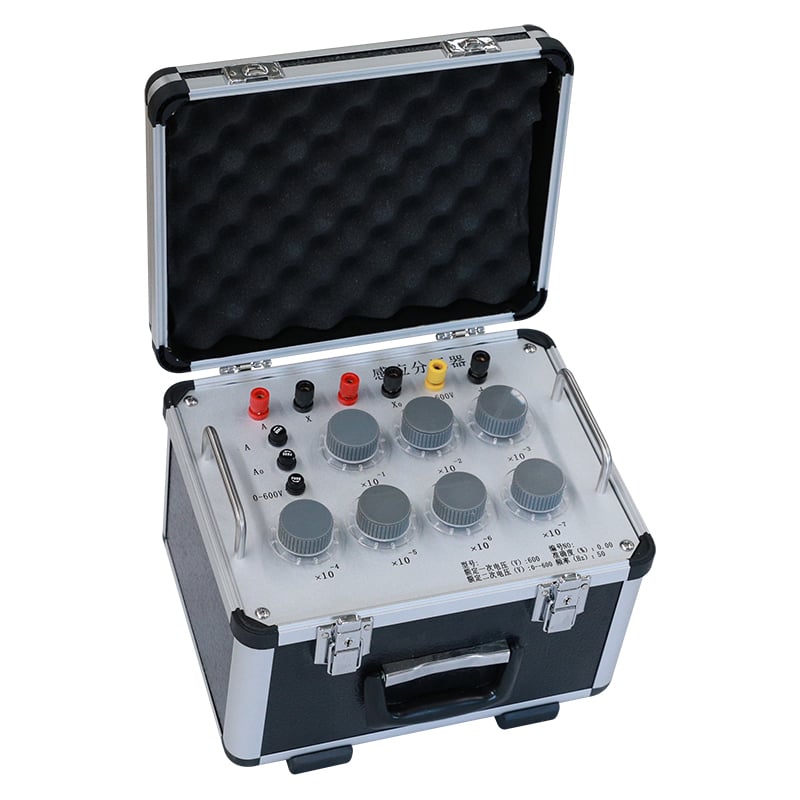
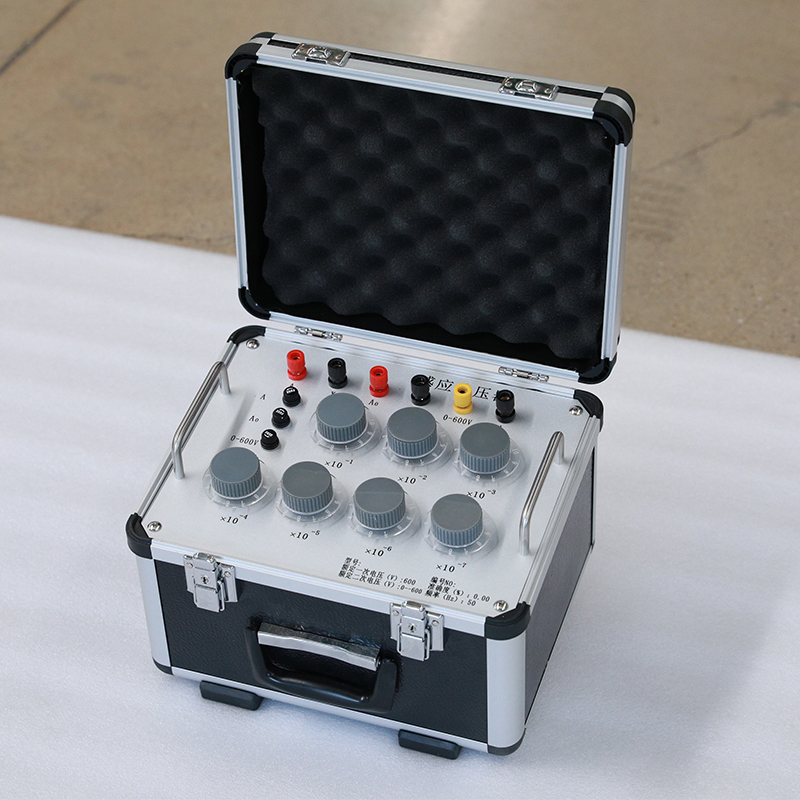
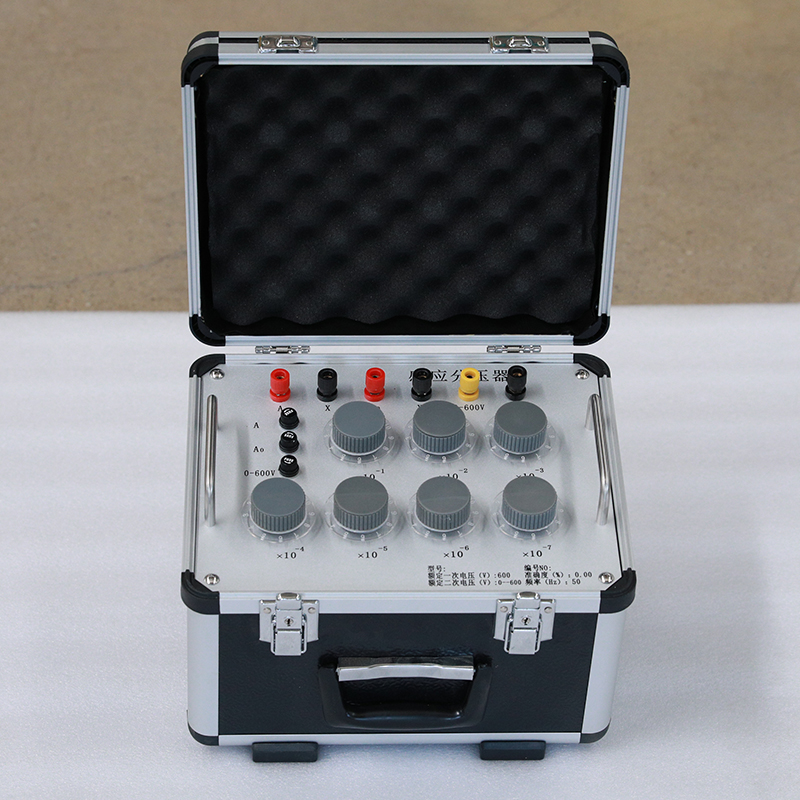
The GDIF-600V is a national metrology grade precision AC voltage ratio standard designed for accurate calibration of voltage transformers, ratio testers, and AC voltmeters in metrology institutes, power utilities, and electrical equipment manufacturers. It fully complies with JJG 244-2003 and DL/T 846.1-2016, adopting a dual-stage autotransformer cascade structure with high-permeability permalloy cores to achieve extremely high ratio accuracy and long-term stability, far superior to resistive or capacitive voltage dividers.
Equipped with 7 precision decade dials, it provides continuous voltage ratio adjustment from 0 to 1.0000000 with a resolution of 1×10⁻⁷, enabling precise matching of any voltage ratio. It features high input impedance (100kΩ) and low output impedance (<1Ω), minimizing load effects and ensuring accurate measurements even with different test instruments. Housed in a rugged aluminum alloy carrying case, it is suitable for both laboratory calibration and on-site field testing.
Specifications
Parameter |
Specification |
Rated Primary Voltage |
600V AC (50Hz) |
Rated Secondary Voltage |
0–600V AC (continuous adjustable) |
Accuracy Class |
0.001% (10ppm);Basic: 0.002% (20ppm) |
Ratio Uncertainty (k=2) |
3×10⁻⁶ |
Annual Ratio Stability |
≤1×10⁻⁶ |
Temperature Coefficient |
≤2ppm/℃ |
Linearity Error |
≤1×10⁻⁶ |
Phase Error |
≤0.001° |
Adjustment Range |
0 to 1.0000000 (7 decimal places) |
Resolution |
1×10⁻⁷ |
Input Impedance |
100kΩ at 50Hz |
Output Impedance |
<1Ω at 50Hz |
Rated Load |
0VA |
Maximum Allowable Load |
≤0.5VA |
Frequency Range |
50Hz±0.5Hz |
Input Voltage Distortion |
<5% |
Operating Temperature |
10℃ ~ +30℃;Humidity ≤80%RH |
Housing Material |
Rugged aluminum alloy |
Dimensions (mm) |
380×280×180 |
Weight |
~11kg |
Compliance |
JJG 244-2003, DL/T 846.1-2016, GB/T 16927.2-2013, IEC 61010-1 CAT III 600V |
Applications
Core Test Objects
- Voltage transformers (VT): calibration of ratio error and phase error
- Current transformers (CT): calibration with voltage-type ratio bridges
- Transformer ratio testers: verification of measurement accuracy
- AC voltmeters: calibration of precision AC voltage meters
- Power quality analyzers: voltage channel calibration
- AC power supplies: output voltage accuracy verification
Typical Usage Scenarios
- National/regional metrology institutes: AC voltage ratio standard for traceability
- Power utility calibration laboratories: transformer and instrument calibration
- Electrical equipment manufacturers: production line quality control
- Electric power research institutes: precision AC measurement and research
- On-site substation testing: field calibration of voltage transformers
Advantages
0.001% Accuracy & 3×10⁻⁶ Uncertainty
National metrology grade precision;far superior to resistive/capacitive dividers → ensures test result validity and regulatory compliance
Dual-Stage Autotransformer Structure
Eliminates isolation error;excellent linearity and phase characteristics → true reproduction of AC voltage waveforms
7-Dial Decade Continuous Adjustment
1×10⁻⁷ ultra-fine resolution;matches any voltage ratio → versatile for all types of voltage transformers
High Input & Low Output Impedance
Minimizes load effects;compatible with all mainstream test instruments → plug-and-play, no additional matching required
FAQ
Q: What is the difference between inductive and resistive/capacitive dividers?
A: Inductive dividers use electromagnetic induction, offering higher accuracy (0.001% vs 0.1%), better stability, and negligible phase error, making them ideal for precision calibration.
Q: Can it calibrate voltage transformers with any ratio?
A: Yes. 7-dial decade adjustment provides continuous ratio from 0 to 1.0000000, matching any voltage transformer ratio.
Q: What is the ratio uncertainty?
A: 3×10⁻⁶ (k=2), which meets the requirements of JJG 244-2003 for 0.001 grade inductive voltage dividers.