 EN
EN

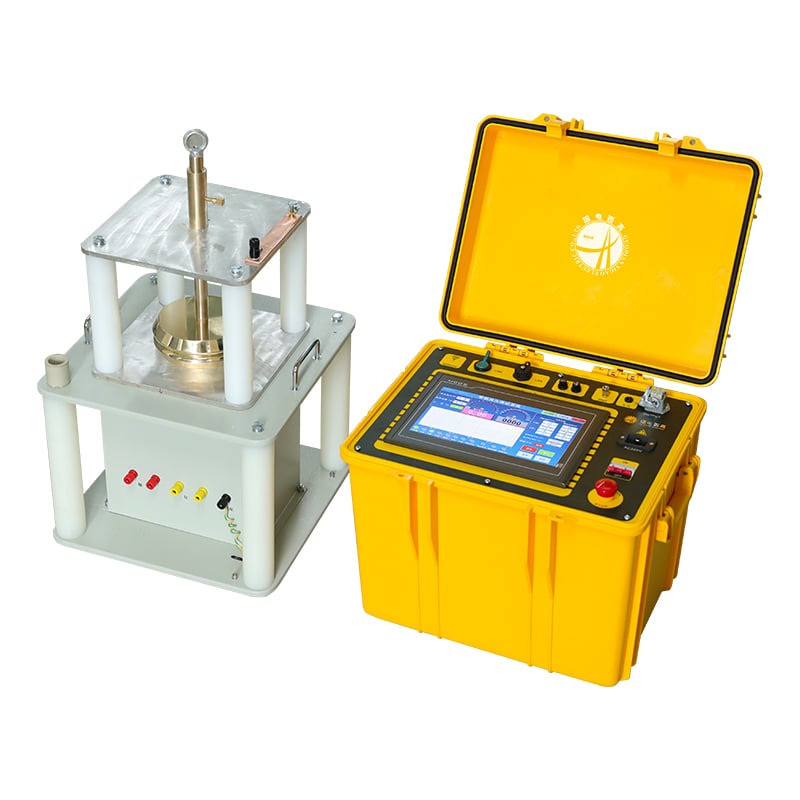
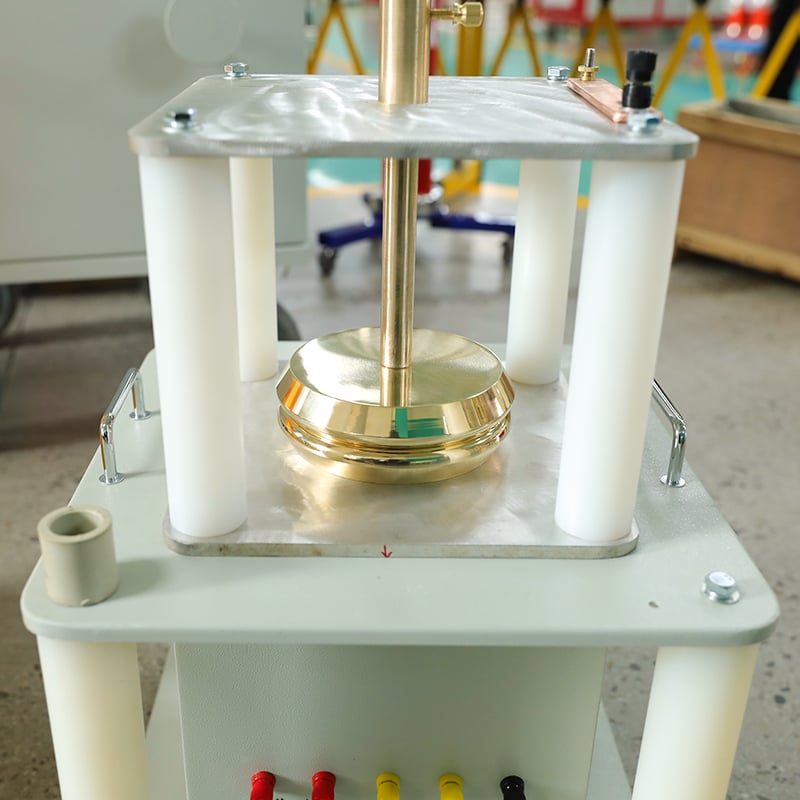
GDML-20 Intelligent Insulator Core Rod Leakage Current Test Device
GDML-20 Digital Intelligent Split-Type Insulator Core Rod Leakage Current and AC Withstand Voltage Test Device with 0.1μA Resolution, Automatic Test Process, for Composite Insulator Quality Inspection.
- Description
- Specifications
- Applications
- Advantages
- FAQ
- Recommended Products
Description
GDML-20 is a professional split-type intelligent insulator core rod test device designed for power frequency leakage current measurement and AC withstand voltage test of composite insulator core rods in insulator manufacturing factories, power research institutes and power companies. It strictly complies with GB/T 19519-2014, IEC 61109:2008 and DL/T 474.4-2006 standards, adopting advanced 14-bit high-speed AD acquisition technology and digital signal processing algorithm that ensures accurate measurement of tiny leakage currents and reliable withstand voltage test results.
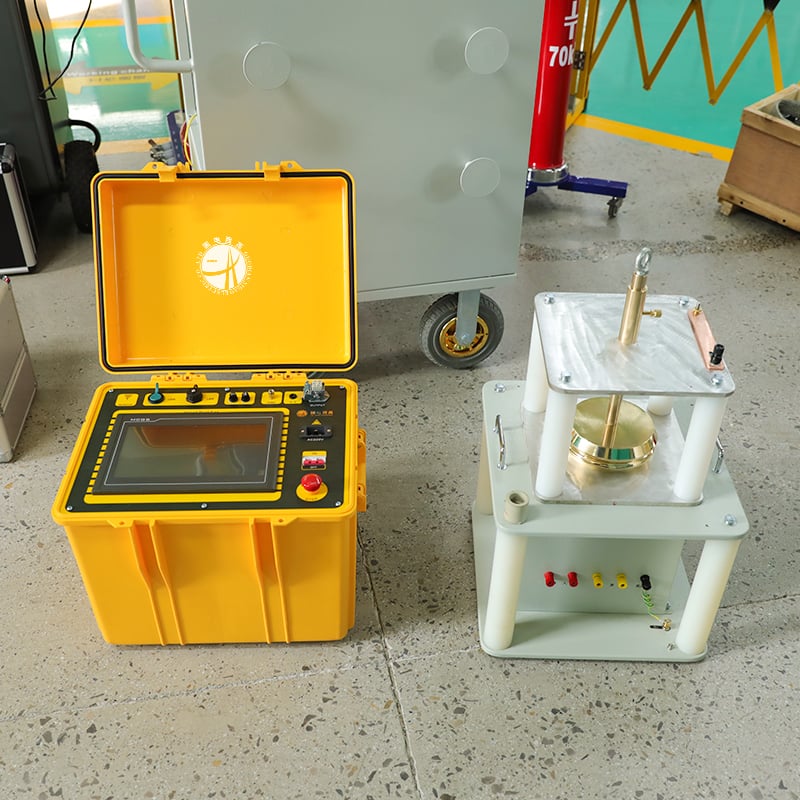
The instrument features innovative split-type design consisting of a low-voltage control box and a high-voltage electrode assembly, ensuring operator safety during high-voltage tests. Its fully automatic test process automatically completes voltage rise, constant voltage maintenance, timing and voltage drop, eliminating manual operation errors. The 320×240 high-brightness LCD display provides real-time display of high voltage, leakage current, low voltage, low current and test time, while the built-in thermal printer supports on-site printing of test reports.
Specifications
| Parameter | Specification |
|---|---|
| Compliance Standards | GB/T 19519-2014, IEC 61109:2008, DL/T 474.4-2006, GB/T 16927.1-2011 |
| Structure | Split-type (low-voltage control box + high-voltage electrode assembly) |
| Rated Capacity | 2kVA |
| Input Power | AC 220V±10%, 50Hz±2Hz |
| Rated Input Current | 9.1A |
| High-Voltage Output Range | 0~20kV AC continuous adjustable |
| Rated Output Current | 2.000mA |
| Leakage Current Resolution | 0.1μA |
| Voltage Measurement Accuracy | ≤±1.5% FS ± 5 digits |
| Current Measurement Accuracy | ≤±1.5% FS ± 5 digits |
| Equipment Inherent Leakage | 0.12mA/20kV (linear, automatic compensation) |
| Timing Range | 0~999s (adjustable) |
| Electrode Maximum Opening Distance | 50mm |
| Electrode Diameter | Φ150mm (copper) |
| Display | 320×240 high-brightness LCD |
| Printer | Built-in thermal printer (57mm width) |
| Data Storage | 100 groups (with time stamp and test parameters) |
| Communication Interface | USB 2.0 (U-disk export) |
| Protection Functions | Over-voltage, over-current, short-circuit, emergency stop |
| Operating Temperature | -20℃ ~ +50℃ |
| Humidity | ≤85% RH (non-condensing) |
| Control Box Dimensions (L×W×H) | 360×280×180mm |
| High-Voltage Electrode Dimensions (L×W×H) | 280×280×300mm |
| Weight | Control box: ~10kg; High-voltage electrode: ~5kg; Total: ~15kg |
| Enclosure | Rugged aluminum alloy |
Applications
Core Test Objects
- Composite insulator core rods: Fiberglass reinforced plastic (FRP) core rods for 10kV~1000kV composite insulators
- Insulator materials: Insulation performance test of various insulation materials and components
- Finished insulators: Leakage current test of finished composite insulators
Typical Usage Scenarios
- Insulator manufacturers: Factory quality control, batch inspection, type test and research and development test of core rods and finished insulators
- Power research institutes: Insulator material performance research and standard formulation test
- Power companies: Sampling inspection of incoming insulators and on-site fault analysis
- Third-party testing institutions: Insulator certification testing and quality assessment
Advantages
Compliance with Latest International Standards
Fully meets GB/T 19519-2014, IEC 61109:2008, DL/T 474.4-2006 → test results are globally recognized
Industry-Leading Split-Type Safety Design
Physical isolation between operator and high-voltage part → eliminates electric shock hazards and ensures test safety
0.1μA Ultra-High Leakage Current Resolution
Accurately captures tiny leakage current changes → identifies early internal defects of core rods that cannot be detected by ordinary testers
Fully Automatic Test Process
One-click to complete the entire test process → eliminates manual operation errors and improves test efficiency by 70%
Automatic Inherent Leakage Compensation
Automatically subtracts equipment inherent leakage → ensures true and accurate core rod leakage current measurement
Built-In Thermal Printer & Data Storage
On-site report printing and 100-group data storage → facilitates test result archiving and quality traceability
Portable Split Design
Lightweight split structure, easy to carry and assemble → suitable for both factory laboratory and on-site test
FAQ
Q: What is the difference between GDML-20 and ordinary AC withstand voltage testers?
A: Ordinary AC withstand voltage testers can only perform withstand voltage tests and measure total leakage current, while GDML-20 is specially designed for insulator core rod tests with the following advantages:
- Ultra-high resolution: 0.1μA leakage current resolution, 100× higher than ordinary testers
- Automatic inherent leakage compensation: Subtracts equipment inherent leakage to obtain true core rod leakage current
- Special electrode design: Φ150mm copper electrodes optimized for core rod test
- Dedicated test process: Fully automatic test process compliant with GB/T 19519 standard
Q: What is the advantage of split-type design?
A: Split-type design physically isolates the low-voltage control box from the high-voltage electrode assembly, ensuring that operators are always in the low-voltage safe area during high-voltage tests. This eliminates electric shock hazards and significantly improves test safety, which is especially important for long-time withstand voltage tests.
Q: How does the automatic inherent leakage compensation work?
A: Before testing the core rod, the instrument first measures the equipment inherent leakage current without the sample. During the test, it automatically subtracts this inherent leakage from the total measured leakage current to obtain the true leakage current of the core rod. This ensures accurate measurement results even for tiny leakage currents.