 EN
EN

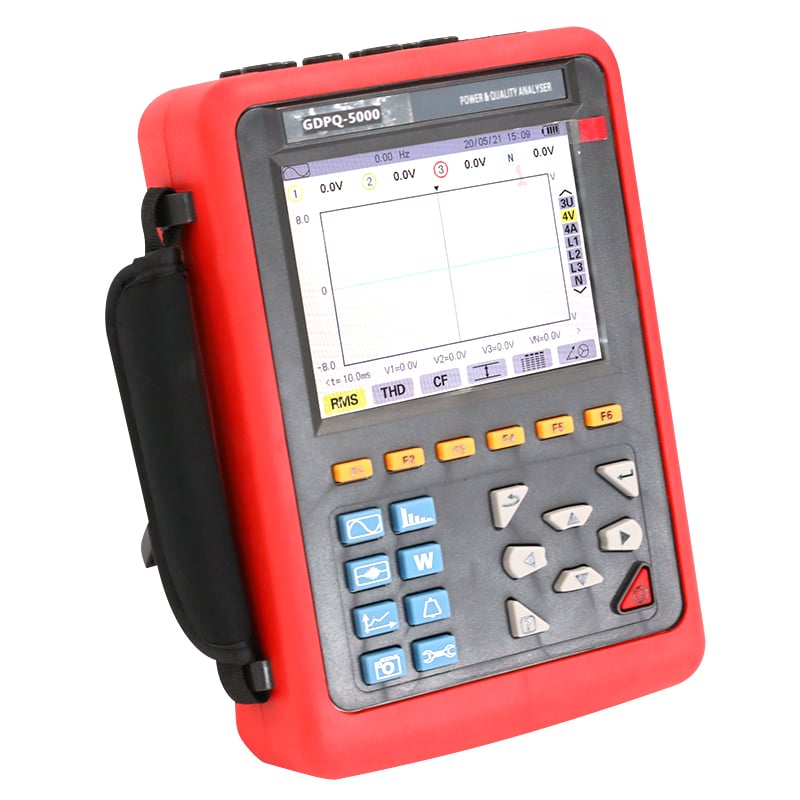
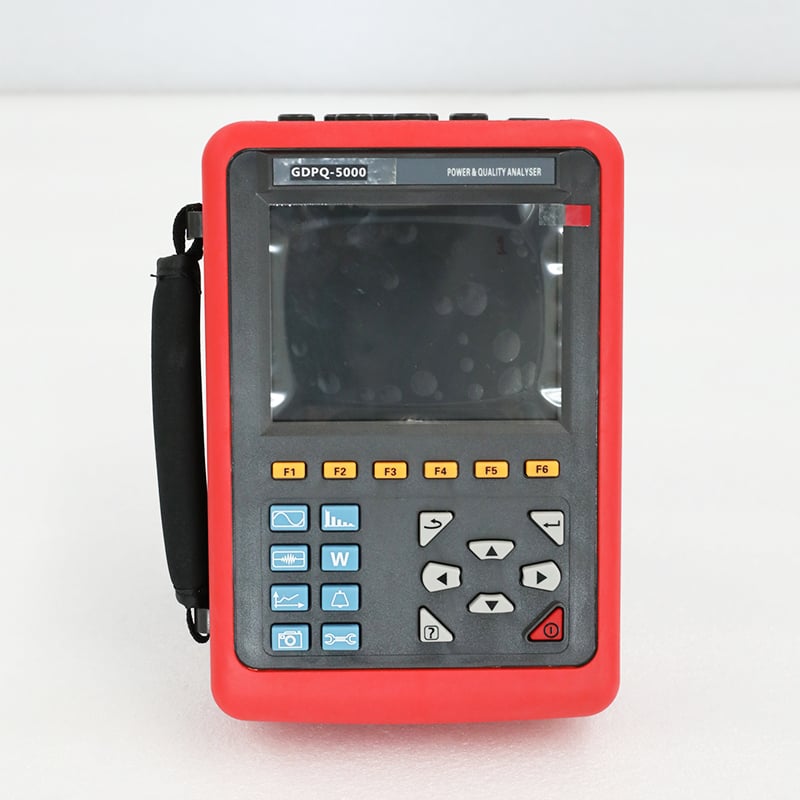
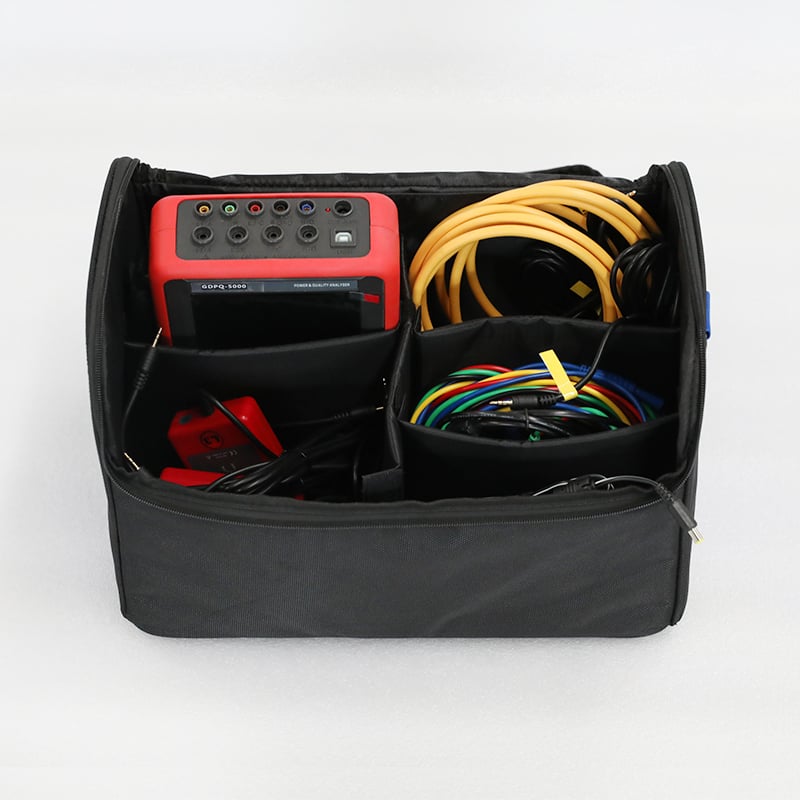
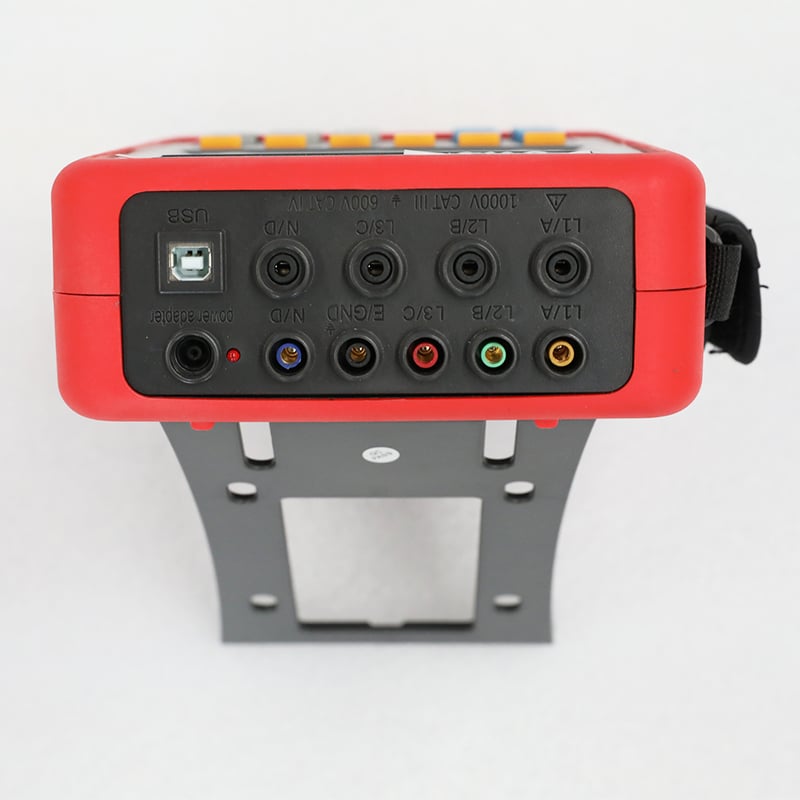
PQA-1000 Portable Power Quality Meter
PQA-1000 Class A Digital Intelligent Portable Power Quality Analyzer with 4-Channel Synchronous Acquisition, Full-Parameter Measurement, Harmonic/Flicker/Voltage Event Detection, for On-Site Power Grid Operation, Industrial Distribution and Renewable Energy Grid-Connection Test.
- Description
- Specifications
- Applications
- Advantages
- FAQ
- Recommended Products
Description
PQA-1000 is a professional Class A portable three-phase power quality analyzer designed for on-site power quality detection, fault diagnosis and compliance evaluation in power utilities, industrial enterprises, commercial buildings, renewable energy power stations and third-party testing institutions. It strictly complies with IEC 61000-4-30 Class A, GB/T 19862-2016 and DL/T 1028-2006 standards, adopting high-speed 4-channel synchronous sampling technology and standard Class A data aggregation algorithm that ensures test results are accurate, comparable and traceable, suitable for contractual acceptance and regulatory compliance scenarios.
The instrument is equipped with 4 voltage channels and 4 current channels for synchronous acquisition, supporting 0.2% high-precision measurement of voltage, current, power, energy and power factor. It covers full power quality parameters including 50th harmonics & interharmonics, voltage flicker (Pst/Plt), three-phase voltage unbalance, frequency deviation and voltage deviation. It can automatically capture and record transient power events such as voltage sag, voltage swell, short interruption and inrush current, with accurate time stamping for fault traceability. It supports multiple wiring modes including three-phase three-wire, three-phase four-wire and single-phase, with automatic wiring identification and wrong wiring prompt.
Specifications
| Parameter | Specification |
|---|---|
| Measurement Grade | Class A |
| Input Channels | 4 voltage channels + 4 current channels, synchronous sampling |
| Sampling Rate | 12.8kHz per channel (256 points per cycle @ 50Hz) |
| ADC Resolution | 16 bit |
| Voltage Measurement | |
| Range | 10V ~ 600V AC, automatic range switching |
| Basic Accuracy | ±0.2% of reading |
| Frequency Range | 42.5Hz ~ 57.5Hz |
| Current Measurement | |
| Input Mode | Clamp current sensor input |
| Standard Range | 100A / 1000A (optional other ranges) |
| Basic Accuracy | ±0.2% of reading (matched with standard sensor) |
| Power & Energy | |
| Active Power Accuracy | ±0.5% |
| Power Factor Range | -1.000 ~ +1.000 |
| Energy Measurement | Active energy, reactive energy, apparent energy |
| Power Quality Parameters | |
| Harmonics | Up to 50th order, amplitude + phase, THD calculation |
| Interharmonics | Up to 50th order |
| Flicker | Pst (short-term), Plt (long-term), complies with IEC 61000-4-15 |
| Three-phase Unbalance | Voltage unbalance factor, current unbalance factor |
| Voltage Events | Sag, swell, interruption, over-voltage, under-voltage, inrush current |
| Frequency Deviation | Measurement accuracy ±0.01Hz |
| Wiring Modes | 1P2W, 1P3W, 3P3W, 3P4W (automatic identification) |
| Display & Operation | 4.3-inch color capacitive touch screen, Chinese/English bilingual |
| Data Storage | 8GB built-in memory, supports continuous recording 30 days |
| Communication Interface | USB 2.0 (U-disk export + PC communication) |
| Power Supply | Built-in 7.4V rechargeable lithium battery; AC 100V~240V adapter |
| Battery Life | ≥ 8 hours continuous working |
| Protection Grade | IP54 (host) |
| Operating Temperature | -10℃ ~ +50℃ |
| Ambient Humidity | 10% ~ 90% RH (non-condensing) |
| Host Dimensions | 240 × 120 × 55mm |
| Host Weight | ~ 0.8kg (including battery) |
| Enclosure | Handheld industrial engineering plastic enclosure |
Applications
Core Test Scenarios
- Power grid operation and maintenance: Substation and distribution network power quality routine patrol, compliance evaluation, power quality problem troubleshooting
- Industrial distribution: Factory power system power quality test, electrical equipment fault diagnosis, harmonic governance effect evaluation
- Renewable energy grid-connection: Photovoltaic, wind power and energy storage power station grid-connection acceptance test, power quality index compliance verification
- Commercial buildings: Office buildings, hospitals, data centers and other important places power supply quality test, sensitive equipment power supply environment evaluation
- Third-party testing: Power quality testing service, engineering acceptance, power quality arbitration test
Typical Test Objects
- Medium and low voltage distribution systems (10kV/0.4kV)
- Industrial variable frequency drive systems, UPS, switching power supplies
- Grid-connected inverter systems for photovoltaic and wind power
- Sensitive electronic equipment and precision instrument power supply systems
- Power capacitor banks, reactive power compensation devices
Advantages
Compliance with International Class A Standard
Fully meets IEC 61000-4-30 Class A, standard aggregation algorithm → test results are authoritative, comparable and traceable, suitable for contractual acceptance and compliance certification
Full-Parameter One-Time Test
Covers harmonics, flicker, unbalance, voltage events, power and energy all indicators → one instrument meets all conventional power quality test requirements
High-Precision Synchronous Measurement
4-channel synchronous sampling, 0.2 grade basic accuracy, 16-bit ADC → accurate phase and harmonic measurement, reliable fault analysis data
Intelligent Event Automatic Capture
Automatic detection and recording of voltage sag/swell/interruption and other events → no manual monitoring, accurate fault time and amplitude, convenient for traceability and responsibility identification
Portable Long-Endurance Field Design
Handheld structure, 8h battery life, IP54 protection → suitable for outdoor mobile patrol and complex industrial site test
FAQ
Q: What is the difference between Class A and Class S power quality analyzers?
A: According to IEC 61000-4-30 standard, Class A is the highest accuracy grade for contractual acceptance, compliance certification and arbitration scenarios, with strict requirements on measurement algorithm, time aggregation and uncertainty, and test results are internationally comparable. Class S is for statistical survey and trend monitoring, with looser accuracy requirements. PQA-1000 reaches Class A standard, which can meet both daily patrol and formal acceptance test requirements.
Q: What power quality problems can PQA-1000 detect?
A: PQA-1000 covers almost all conventional power quality indicators, mainly including: ① steady-state indicators: voltage deviation, frequency deviation, three-phase unbalance, harmonics & interharmonics, voltage flicker; ② transient events: voltage sag, voltage swell, short power interruption, inrush current, etc. It can fully meet the test requirements of power quality national standards and grid-connection standards.
Q: Can it be used for grid-connection test of photovoltaic and wind power?
A: Yes. PQA-1000 Class A accuracy and full-parameter coverage can fully meet the power quality index requirements of renewable energy grid-connection standards, including harmonic, flicker, unbalance and voltage deviation test. It can record long-term operation data, evaluate grid-connection compliance, and is widely used in photovoltaic power stations, wind power plants and energy storage systems grid-connection acceptance.