 EN
EN

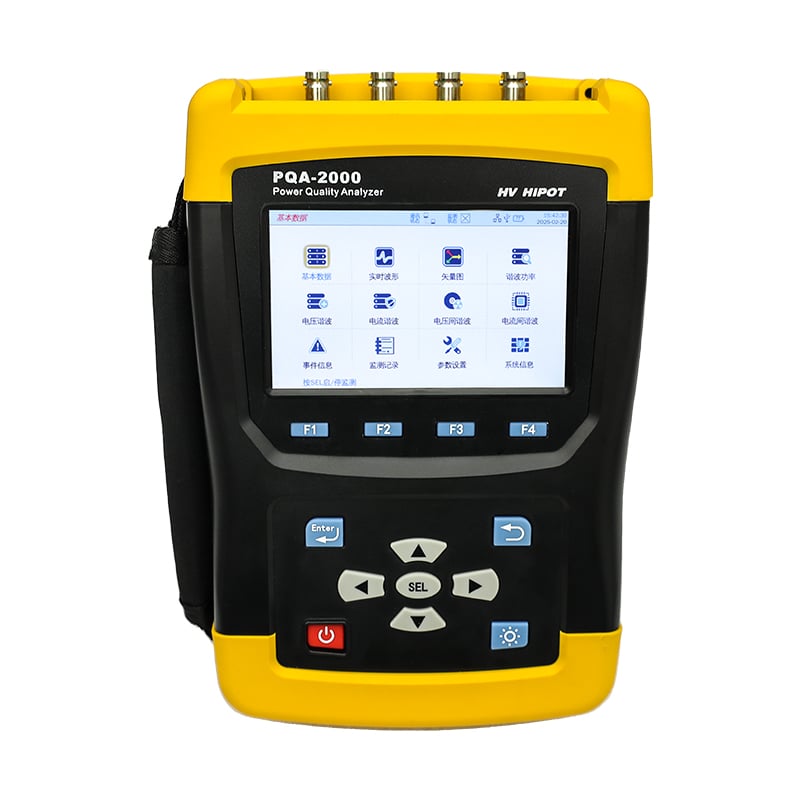
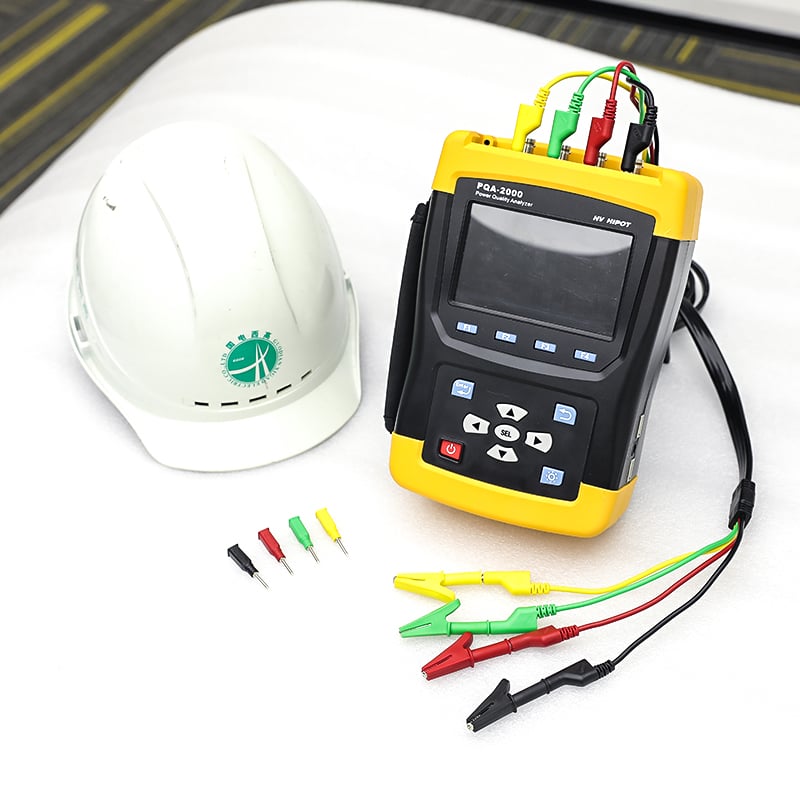
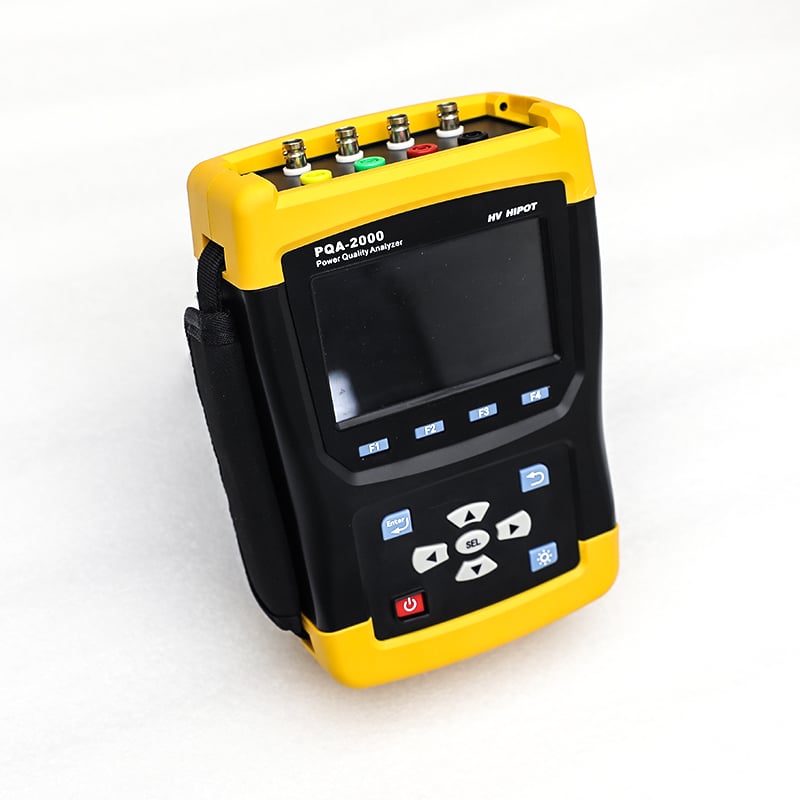
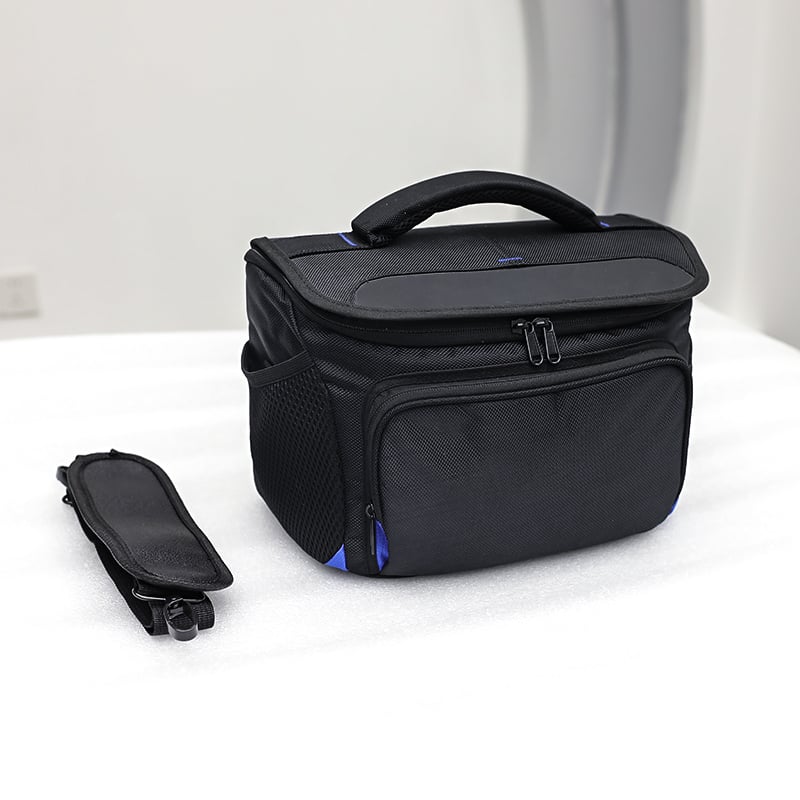
PQA-2000 High-Performance Power Quality Analyzer
PQA-2000 Class A Ed.3 High-Precision Intelligent Power Quality Analyzer with Transient Recording, GPS Synchronization, Full-Parameter Measurement, for High-Accuracy Grid Test, New Energy Grid-Connection Acceptance and Complex Fault Diagnosis.
- Description
- Specifications
- Applications
- Advantages
- FAQ
- Recommended Products
Description
PQA-2000 is a professional high-end Class A three-phase power quality analyzer designed for high-precision power quality detection, complex fault diagnosis, compliance acceptance and grade evaluation in power research institutes, provincial metrology centers, third-party authoritative testing institutions, new energy power stations and large industrial enterprises. It strictly complies with IEC 61000-4-30 Ed.3 Class A, GB/T 19862-2016 and DL/T 1028-2006 standards, adopting 24-bit high-resolution ADC + dual-core DSP processing architecture and standard Class A aggregation algorithm, ensuring test data is authoritative, comparable and traceable, suitable for contractual acceptance, arbitration test and regulatory compliance scenarios.
The instrument is equipped with 4 voltage channels and 4 current channels for synchronous sampling at 25.6kHz per channel, achieving 0.1% basic measurement accuracy for voltage and current. It covers full power quality parameters including 100th harmonics & interharmonics, short-term/long-term flicker, three-phase unbalance, frequency deviation and voltage deviation, and supports high-speed transient recording up to 200kHz sampling rate, which can capture transient overvoltage, surge current and voltage notch events in detail. The built-in GPS/Beidou dual-mode timing module provides millisecond-level accurate time stamps for events, supporting multi-device synchronous networking test.
Specifications
| Parameter | Specification |
|---|---|
| Input Channels | 4 voltage channels + 4 current channels, fully synchronous sampling |
| Steady-State Sampling Rate | 25.6kHz per channel (512 points per cycle @ 50Hz) |
| Transient Sampling Rate | Up to 200kHz |
| ADC Resolution | 24 bit sigma-delta |
| Voltage Measurement | |
| Range | 10V ~ 690V AC, automatic range switching |
| Basic Accuracy | ±0.1% of reading |
| Frequency Range | 42.5Hz ~ 69Hz |
| Current Measurement | |
| Input Mode | Clamp current sensor / Rogowski coil input |
| Standard Range | 100A / 1000A (optional other ranges up to 3000A) |
| Basic Accuracy | ±0.1% of reading (matched with standard clamp sensor) |
| Power & Energy | |
| Active Power Accuracy | ±0.2% |
| Power Factor Range | -1.000 ~ +1.000, resolution 0.001 |
| Energy Measurement | Active energy, reactive energy, apparent energy, bidirectional energy statistics |
| Power Quality Parameters | |
| Harmonics | Up to 100th order, amplitude + phase + power, THD calculation |
| Interharmonics | Up to 100th order |
| Flicker | Pst (short-term), Plt (long-term), complies with IEC 61000-4-15 |
| Three-phase Unbalance | Positive/negative/zero sequence, voltage/current unbalance factor |
| Voltage Events | Sag, swell, interruption, over-voltage, under-voltage, notch, inrush current, transient overvoltage |
| Frequency Deviation | Measurement accuracy ±0.005Hz |
| K-Factor | Transformer K-factor calculation |
| Timing Function | Built-in GPS/Beidou dual-mode, timing accuracy ≤1ms |
| Wiring Modes | 1P2W, 1P3W, 3P3W, 3P4W (automatic identification, 48 kinds of wrong wiring diagnosis) |
| Display & Operation | 5-inch 800×480 high-brightness capacitive touch screen, Chinese/English bilingual |
| Data Storage | 16GB built-in memory, microSD card expandable up to 128GB |
| Communication Interfaces | USB 2.0, Ethernet (optional Wi-Fi, Bluetooth) |
| Power Supply | Built-in 7.4V high-capacity lithium battery; AC 100V~240V adapter |
| Battery Life | ≥ 12 hours continuous working |
| Protection Grade | IP65 (host) |
| Operating Temperature | -20℃ ~ +60℃ |
| Ambient Humidity | 5% ~ 95% RH (non-condensing) |
| Host Dimensions | 260 × 135 × 60mm |
| Host Weight | ~ 0.95kg (including battery) |
| Enclosure | Handheld industrial engineering plastic enclosure with shockproof rubber |
Applications
Core Test Scenarios
- Power grid precision detection: Provincial and municipal power research institutes, metrology centers power quality grade evaluation, compliance test and standard verification
- New energy grid-connection acceptance: Photovoltaic, wind power, energy storage and charging station grid-connection acceptance test, power quality index compliance verification
- Complex industrial fault diagnosis: Large factories, petrochemical, metallurgy and other complex industrial systems electrical fault traceability, harmonic governance effect evaluation
- Key place power supply assessment: Data centers, hospitals, high-speed rail stations and other important sensitive places power supply quality comprehensive evaluation
- Third-party authoritative testing: Power quality arbitration test, engineering acceptance test, product quality certification test
Typical Users
- Power research institutes & metrology centers: Provincial electric power research institutes, metrology testing centers, national quality inspection institutions
- New energy operators: Photovoltaic power plants, wind farms, energy storage power stations, new energy EPC contractors
- Large industrial enterprises: Petrochemical, metallurgy, semiconductor, automobile manufacturing and other large power users
- Third-party testing institutions: Authoritative testing companies, engineering acceptance institutions, power technology service providers
- Key infrastructure operators: Data centers, rail transit, airports, hospitals and other important place operation management departments
Advantages
Compliance with the Latest International Class A Standard
Fully meets IEC 61000-4-30 Ed.3 Class A, latest standard aggregation algorithm → test results are authoritative, comparable and traceable, suitable for arbitration and acceptance scenarios
Industry-Leading 0.1% Measurement Accuracy
24-bit high-resolution ADC, metering-grade circuit design → accurate measurement of subtle voltage and current changes, meets high-precision detection and calibration requirements
Full Coverage of Steady State & Transient Parameters
100th harmonics, full event capture, 200kHz transient recording → one instrument covers all power quality test items from steady-state evaluation to transient fault diagnosis
Professional Analysis & Report System
Multi-dimensional data analysis, multi-standard report templates → efficient post-processing, directly generates compliant acceptance reports, improves work efficiency
FAQ
Q: What is the function of transient recording?
A: Conventional power quality test mainly focuses on steady-state indicators and slow-changing voltage events, but cannot capture high-speed transient overvoltage and surge current caused by lightning, switching operation and inverter action. The 200kHz high-speed transient recording function of PQA-2000 can capture nanosecond-level transient voltage and current waveforms in detail, with pre-trigger function to record the complete process before and after the event. It is of great value for tracing the causes of equipment damage, insulation breakdown and frequent failures of precision instruments in industrial systems.
Q: What is the significance of GPS synchronous timing for power quality test?
A: GPS synchronous timing provides unified millisecond-level time benchmark for test data, which has two core values:
- Multi-point synchronous test: For large power grids and park distribution systems, multiple devices can be used for synchronous test at different points to compare the propagation and attenuation of power quality problems, and locate the source of interference
- Fault traceability: Accurate time stamps for power events can correspond with equipment failure records, accurately determine the causal relationship between power quality events and equipment failures, which is essential for arbitration and responsibility identification