 EN
EN

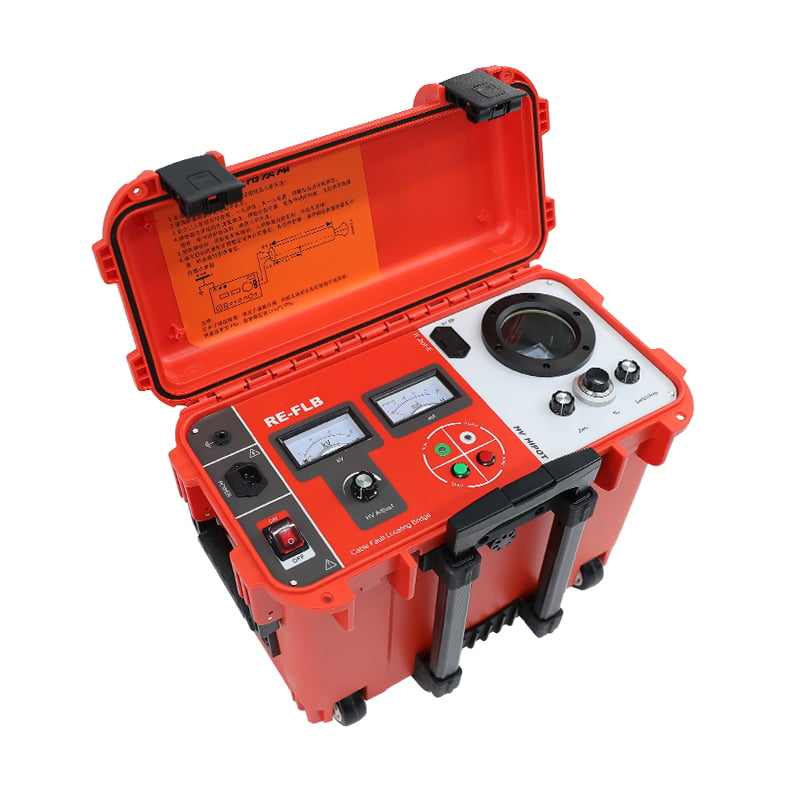
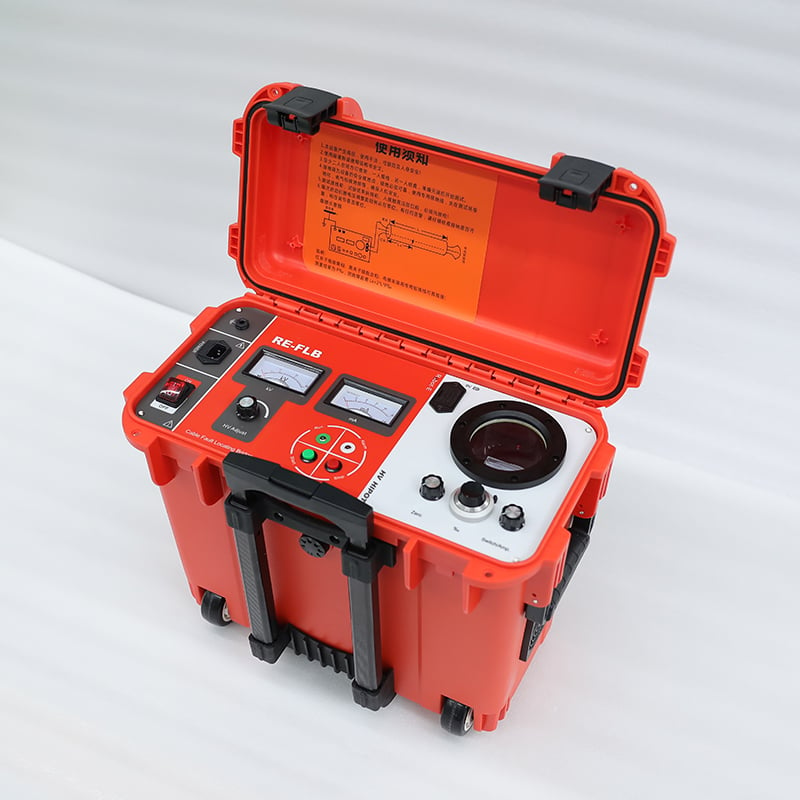
RE-FLB HV Cable Fault Bridge Tester
RE-FLB High Voltage Cable Fault Locating Bridge with Built-in HV Constant Current Source, Murray Bridge Principle, Four-Terminal Measurement, for Cable Breakdown Point and Outer Sheath Fault Accurate Location.
- Description
- Specifications
- Applications
- Advantages
- FAQ
- Recommended Products
Description
RE-FLB is a professional high-voltage cable fault locating bridge designed for breakdown point location, insulation defect detection and outer sheath fault test of medium and high voltage power cables in power operation and maintenance teams, cable construction companies, cable manufacturers and third-party testing institutions. It strictly complies with DL/T 2530.1-2022, DL/T 849.1-2019 and GB/T 12706.1 standards, adopting the classic Murray bridge measuring principle with built-in high-voltage constant current source, which integrates fault burn-through and precise location into one unit, eliminating the need for external high-voltage equipment and greatly improving on-site fault handling efficiency.
The instrument is equipped with a 0~15kV continuously adjustable negative high-voltage constant current source with 30mA maximum output current, which can directly burn through high-resistance faults and reduce insulation resistance, and also supports high-voltage cable outer sheath fault detection. It adopts four-terminal resistance measurement technology with special dual-core high-voltage test cables, which completely eliminates the error caused by lead wire resistance and contact resistance, achieving a positioning accuracy of ±(0.2%·L±1)m. The bridge body is placed at high potential side, and the operation panel is designed at ground potential, operated with a special insulating rod to realize complete electrical isolation and ensure operator safety.
Specifications
| Parameter | Specification |
|---|---|
| Compliance Standards | DL/T 2530.1-2022, DL/T 849.1-2019, GB/T 12706.1-2020, DL/T 596-2021 |
| Test Principle | Murray bridge principle, four-terminal resistance measurement |
| Test Output Voltage | 0 ~ -15kV DC, continuously adjustable (negative polarity) |
| Maximum Output Current | 30mA |
| Burn-Through Function | Built-in, 0~15kV burn-through voltage, 30mA burn-through current |
| Positioning Accuracy | ± (0.2% · L ± 1) m (L is total cable length) |
| Anti-Interference Ability | > 100VAC |
| Balance Indication | High-sensitivity amplified galvanometer |
| Applicable Fault Types | Breakdown faults, insulation low defects, high-resistance grounding, outer sheath damage |
| Applicable Cables | 10kV~35kV power cables, control cables, communication cables, outer sheaths |
| Input Power Supply | AC 220V ± 10%, 50Hz ± 2Hz |
| Operation Mode | Ground potential panel, operated by insulating rod |
| Protection Functions | Over-voltage, over-current, short-circuit, reliable grounding |
| Operating Temperature | -10℃ ~ +50℃ |
| Ambient Humidity | ≤85% RH (non-condensing) |
| Dimensions (L×W×H) | 450 × 350 × 220mm |
| Weight | ≤ 12kg |
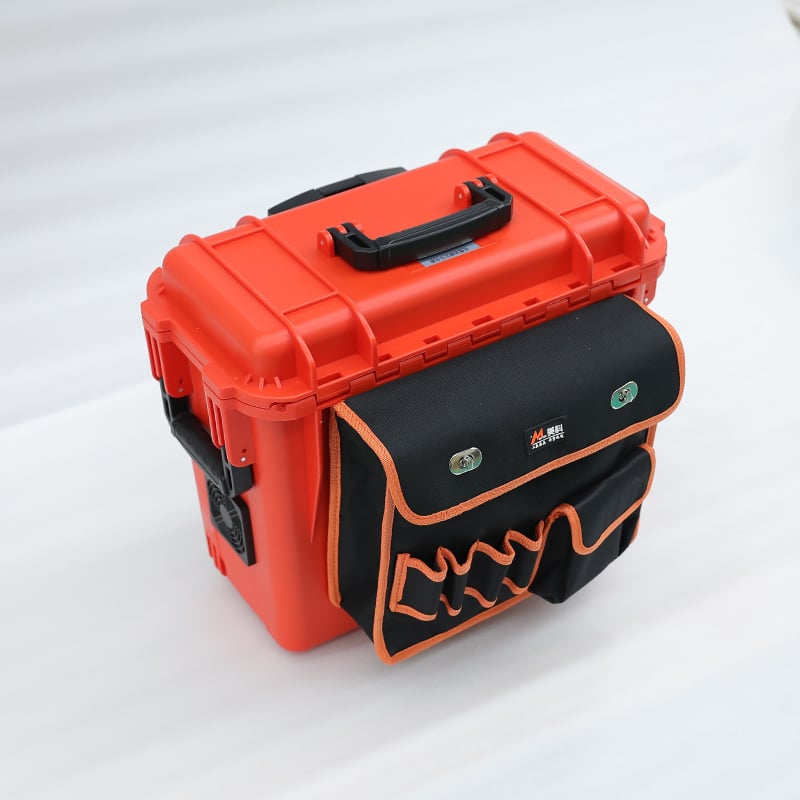
| Enclosure | Reinforced industrial portable chassis with handle |
Applications
Core Test Objects
- Cable fault types: Breakdown faults, insulation resistance low defects, high-resistance grounding faults, outer sheath damage faults
- Cable types: 10kV~35kV power cables, high-voltage cable outer sheaths, control cables, communication cables, factory finished cables
- Matching usage: Can independently complete high-resistance fault burn-through + rough location, and can also cooperate with cable fault pinpointer to complete precise pinpointing
Typical Usage Scenarios
- Power operation and maintenance departments: Cable fault rush repair, outer sheath fault detection, daily preventive test, equipment status evaluation
- Cable construction companies: Post-laying fault troubleshooting, completion acceptance, outer sheath integrity test
- Cable manufacturers: Finished cable defect detection, factory quality control, raw material incoming inspection
- Industrial and mining enterprises: Internal power cable fault maintenance, daily insulation inspection, regular equipment maintenance
- Third-party testing institutions: Cable fault detection service, outer sheath performance test, construction quality acceptance
Advantages
Compliance with Special Industry Standards
Fully meets DL/T 2530.1-2022 general technical conditions for cable fault locating bridges → test methods and indicators comply with professional power test specifications, results are authoritative and traceable
Integrated Design of Burn-Through & Location
Built-in 15kV high-voltage constant current source, one unit completes burn-through + location → no need for external high-voltage equipment, reduces on-site equipment carrying and wiring workload by 60%
High Precision Four-Terminal Measurement
Four-terminal test method eliminates lead error, ±(0.2%·L±1)m accuracy → ensures positioning accuracy under long lead wires on site, avoids secondary errors
Ground Potential Isolation Safety
High-low potential isolation design, insulating rod operation → eliminates electric shock hazard during high-voltage test, ensures absolute safety of operators
Strong Anti-Interference Performance
>100VAC anti-interference ability, stable on-site measurement → works reliably in complex substation and construction site electromagnetic environments, no balance drift
FAQ
Q: What is the difference between this HV bridge and ordinary low-voltage cable bridge?
A: Ordinary low-voltage bridges can only test metallic short-circuit and low-resistance grounding faults, and require external high-voltage burn-through equipment. RE-FLB has a built-in 0~15kV high-voltage constant current source with integrated burn-through function, which can directly handle high-resistance faults and insulation defects. It also supports high-voltage cable outer sheath fault testing, with a wider application range. The ground potential isolation design ensures higher safety and is suitable for on-site high-voltage operation.
Q: What is the advantage of four-terminal resistance measurement method?
A: Ordinary two-terminal measurement will include the resistance of test leads in the result, causing large errors with long leads. The four-terminal method separates the current loop and voltage loop. The special dual-core high-voltage test cable transmits current and potential signals respectively, completely eliminating errors caused by lead resistance and contact resistance. It ensures test accuracy, especially suitable for long cables and scenarios with long on-site wiring.
Q: Can it test high-voltage cable outer sheath faults?
A: Yes. RE-FLB is specially adapted for location test of high-voltage cable outer sheath damage and grounding faults. It applies voltage between the outer sheath and armor/ground through the high-voltage constant current source, and uses the bridge principle to accurately locate the outer sheath damage point, which is a commonly used function in cable operation maintenance and construction acceptance.