 EN
EN

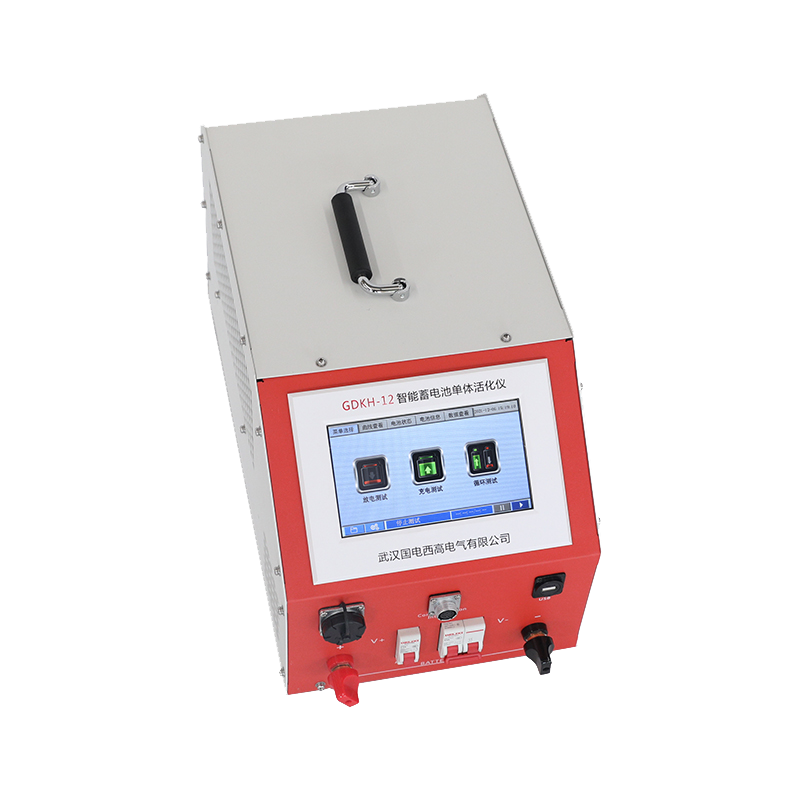
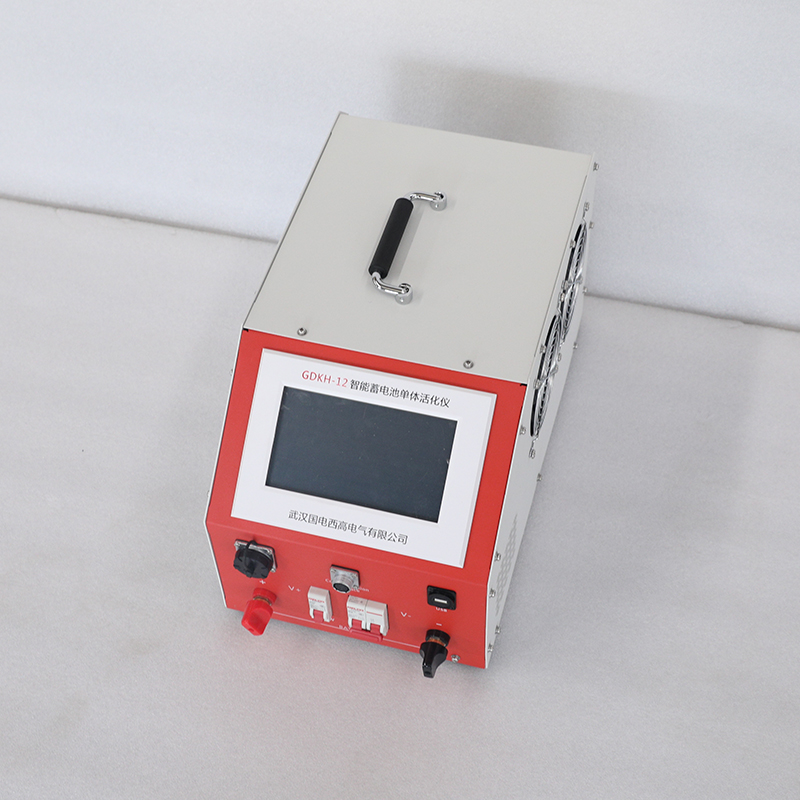
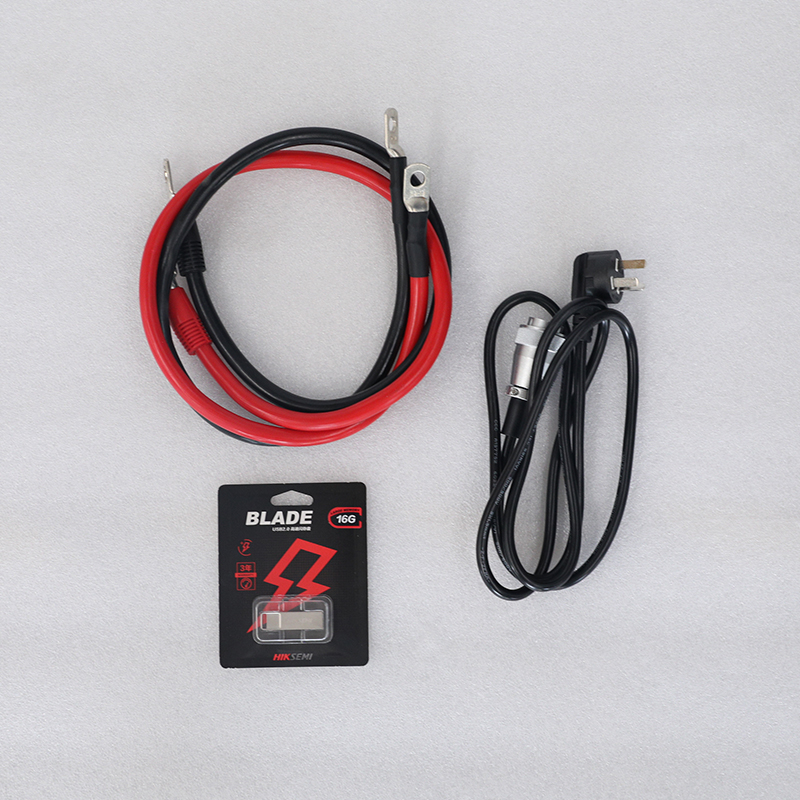
GDKH-12 Intelligent Single Cell Battery Activator
GDKH-12 Digital Intelligent Single Cell Battery Activator with 2V/6V/12V Auto-Recognition, 100A High Current, On-Line Activation, Up to 99 Cycle Charge-Discharge, for Lead-Acid Battery Capacity Restoration.
- Description
- Specifications
- Applications
- Advantages
- FAQ
- Recommended Products
Description
GDKH-12 is a professional high-current single cell battery activator designed for repair, capacity restoration and performance evaluation of lagging single cells in valve-regulated lead-acid (VRLA) battery packs used in substations, power plants, communication base stations, UPS systems and data centers. It strictly complies with DL/T 1397.7-2014, DL/T 724-2000 and IEC 60896-2:2008 standards, adopting 2V/6V/12V automatic voltage recognition that covers all mainstream single cell types with one single instrument.
The instrument features industry-leading on-line activation technology, allowing activation of lagging cells without disassembly from the battery pack and without affecting the normal floating charge operation of the entire battery system. Its advanced closed-loop constant current control technology ensures stable charge/discharge current with ±1% accuracy throughout the entire process. It supports up to 99 programmable charge-discharge cycles, effectively breaking down lead sulfate crystals on battery plates and restoring lost capacity.
Specifications
| Parameter | Specification |
|---|---|
| Compliance Standards | DL/T 1397.7-2014, DL/T 724-2000, IEC 60896-2:2008, IEEE 1188-2005 |
| Supported Cell Voltages | 2V, 6V, 12V (automatic recognition) |
| Voltage Measurement Range | 2V: 0~3V; 6V/12V: 0~16V |
| Voltage Resolution | 0.001V |
| Voltage Accuracy | ±0.25% FS |
| Charge/Discharge Current Range | 2V: 0~100A; 6V/12V: 0~30A (continuous adjustable) |
| Current Resolution | 0.1A |
| Current Accuracy | ±1% FS ± 0.5A |
| Capacity Measurement Range | 0Ah ~ 9999Ah |
| Charging Mode | Smart 3-stage (pre-charge, constant current, constant voltage-float charge) |
| Maximum Cycle Times | Up to 99 charge-discharge cycles |
| On-Line Activation | Yes (floating charge state, no disassembly required) |
| Display | High-brightness backlit LCD, Chinese/English bilingual |
| Data Storage | 1000 groups (with time stamp, parameters and curves) |
| Communication Interface | USB 2.0 (U-disk export) |
| Termination Conditions | Voltage, time, capacity, manual stop |
| Protection Functions | Over-voltage, under-voltage, over-current, over-temperature, reverse polarity, short circuit, fan fault, emergency stop |
| Cooling Method | Intelligent forced air cooling |
| Power Supply | AC 220V±15%, 50Hz±2Hz |
| Power Consumption | ≤300W (peak at 2V/100A) |
| Operating Temperature | -10℃ ~ +50℃ |
| Humidity | ≤85% RH (non-condensing) |
| Dimensions (L×W×H) | 320×240×160mm |
| Weight | ~5kg (including all components) |
| Enclosure | Rugged aluminum alloy, IP40 |
Applications
Core Test Objects
- Single lead-acid cells: 2V, 6V, 12V valve-regulated lead-acid (VRLA) cells
- Battery packs: 48V, 110V, 220V series-connected battery packs (single cell activation)
- Application systems: Substation DC systems, communication base station power systems, UPS systems, data center backup power
Typical Usage Scenarios
- Power companies: Substation battery pack routine maintenance, lagging cell identification and activation, capacity restoration
- Telecom operators: Communication base station battery pack maintenance, single cell repair and replacement
- Data centers: UPS battery pack regular inspection, lagging cell activation to extend battery life
- Battery manufacturers: Factory quality control, battery performance test and activation
- Third-party testing institutions: Battery system certification testing, performance evaluation and on-site calibration services
Advantages
Compliance with Latest Industry Standards
Fully meets DL/T 1397.7-2014, DL/T 724-2000, IEC 60896-2:2008 → test results are globally recognized
Industry-Leading On-Line Activation Technology
Activates lagging cells without disassembly, no impact on system operation → reduces maintenance time by 80% and avoids system downtime risks
100A High-Current Output
Supports up to 1000Ah 2V cells, meeting the requirements of all mainstream large-capacity battery systems → one instrument covers all single cell types
Intelligent Cycle Activation
Up to 99 programmable charge-discharge cycles, effectively breaking down lead sulfate crystals → restores 10%~30% capacity of lagging cells and extends battery service life by 2~3 years
Real-Time Waveform Monitoring
Dynamic voltage and current curve display, facilitating detailed analysis of battery characteristics → accurately identifies battery failure modes and provides scientific maintenance basis
Comprehensive Data Management
1000-group data storage, USB export and PC analysis software → facilitates digital management of battery maintenance data
FAQ
Q: What is the advantage of on-line activation compared to off-line activation?
A: Traditional off-line activation requires disassembling the lagging cell from the battery pack, which is time-consuming and may affect the normal operation of the entire battery system. GDKH-12's on-line activation technology allows activation of lagging cells directly in the floating charge state, no disassembly required, no impact on system operation, reducing maintenance time by 80% and avoiding system downtime risks.
Q: How does battery activation work?
A: Lead-acid battery capacity degradation is mainly caused by lead sulfate crystallization on the battery plates due to long-term floating charge, over-discharge or improper maintenance. GDKH-12 uses multiple controlled charge-discharge cycles to break down these lead sulfate crystals, restore the active material on the plates, and thus recover the lost battery capacity. After 1~3 activation cycles, the capacity of most lagging cells can be restored by 10%~30%.
Q: Can GDKH-12 activate all types of lead-acid batteries?
A: GDKH-12 is designed for valve-regulated lead-acid (VRLA) batteries, including AGM and gel types. It is not suitable for flooded lead-acid batteries or lithium-ion batteries. For best results, activation should be performed on batteries with mild to moderate sulfation. Severely damaged batteries (e.g., with shorted plates or dried electrolyte) cannot be restored.
Q: How many activation cycles are needed for a lagging cell?
A: The number of activation cycles depends on the degree of sulfation. For mildly sulfated batteries, 1~3 cycles are usually sufficient. For moderately sulfated batteries, 3~6 cycles may be required. For severely sulfated batteries, up to 10 cycles may be needed. GDKH-12 supports up to 99 programmable cycles, allowing flexible adjustment according to battery conditions.