 EN
EN

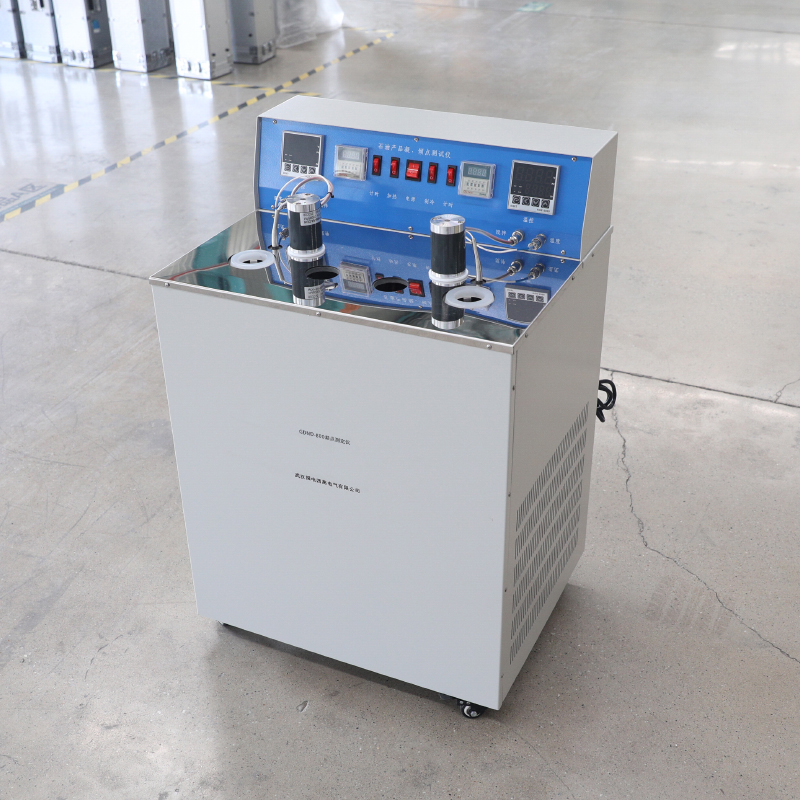
GDND-800 Transformer Oil Freezing Point Tester
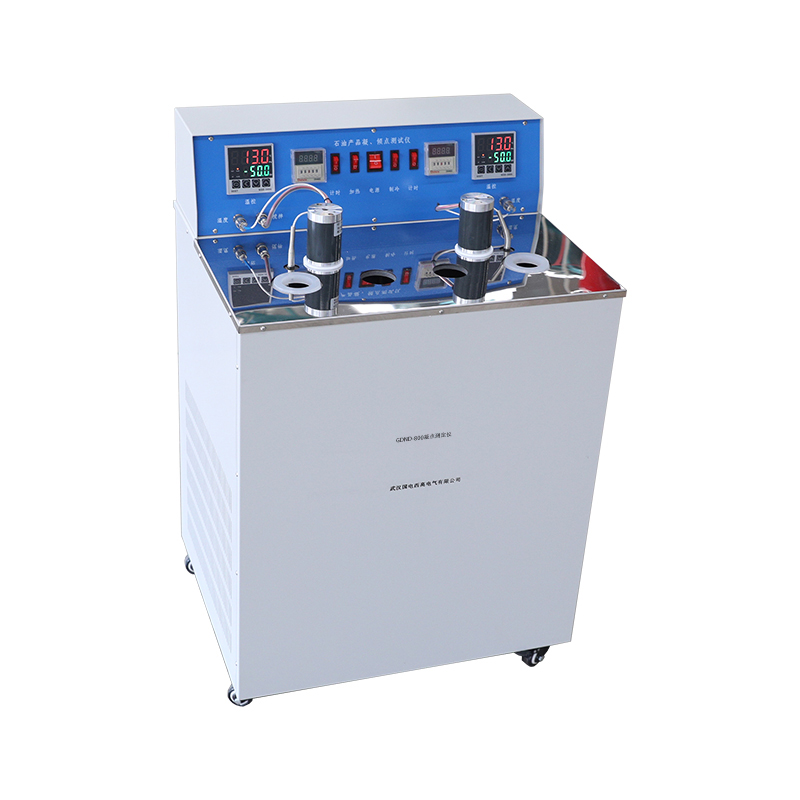
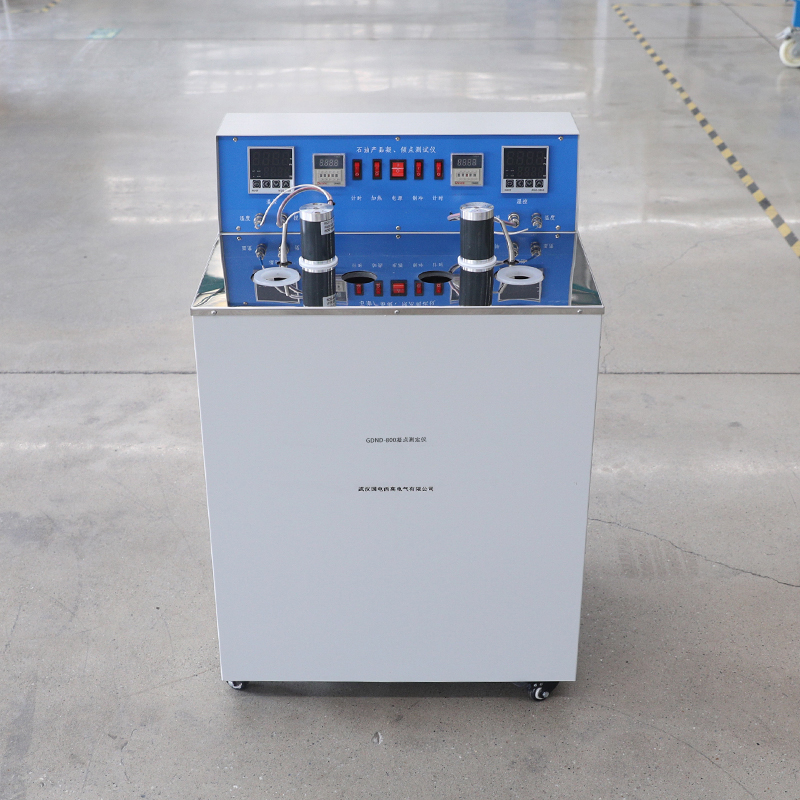
GDND-800 Digital Intelligent Transformer Oil Freezing Point and Pour Point Tester with Dual Independent Test Slots, High-Efficiency Compressor Refrigeration, PID Temperature Control, for Petroleum Products Low Temperature Fluidity Testing.
- Description
- Specifications
- Applications
- Advantages
- FAQ
- Recommended Products
Description
The GDND-800 is a professional-grade, dual-slot freezing point and pour point testerexclusively designed for low temperature fluidity assessment of insulating oils, lubricating oils, fuel oils and other petroleum products in power systems and petrochemical industries. It fully complies with GB/T 510-2018, GB/T 3535-2006, ASTM D97-2023 and ISO 3016-2019 standards, adopting advanced compressor refrigeration technology that provides fast and stable cooling performance.
The instrument features two independent test slots that allow simultaneous testing of two different samples, greatly improving test efficiency. Its innovative PID intelligent temperature control algorithm strictly follows the standard cooling rate requirements, ensuring accurate and repeatable test results. The imported PT100 platinum resistance temperature sensor provides reliable temperature measurement with ±0.5℃ accuracy, while the built-in high-speed stirring system ensures uniform temperature distribution in the cold bath.
Specifications
| Parameter | Specification |
|---|---|
| System Parameters | |
| Compliance Standard | GB/T 510-2018, GB/T 3535-2006, ASTM D97-2023, ISO 3016-2019 |
| Test Items | Freezing point, Pour point |
| Test Slots | 2 independent test slots |
| Display | High-brightness LED digital display |
| Operation Mode | Button operation |
| Timer | Built-in digital timer, 0~9999s adjustable |
| Temperature Parameters | |
| Temperature Range | Room temperature ~ -45℃ |
| Temperature Control Accuracy | ±0.5℃ |
| Temperature Resolution | 1℃ |
| Temperature Sensor | Imported PT100 platinum resistance (A grade) |
| Cooling Rate | ≤60 minutes from room temperature to -45℃ (ambient temperature ≤30℃) |
| Temperature Uniformity | ≤0.5℃ in working area |
| Refrigeration System | |
| Refrigeration Method | Hermetic compressor refrigeration |
| Refrigerant | R404a environmentally friendly refrigerant |
| Compressor Power | 375W |
| Heating Power | 300W |
| Stirring Motor Power | 22W × 2 |
| Cold Bath Parameters | |
| Cold Bath Material | Stainless steel |
| Cold Bath Volume | ~2.5L |
| Cooling Medium | Anhydrous ethanol (purity ≥99%) |
| Power Supply | |
| Input Power | AC 220V±10%, 50Hz |
| Power Consumption | ≤400W |
| Physical Parameters | |
| Dimensions | 500×650×700mm (L×W×H) |
| Weight | ~40kg (including all components) |
| Housing | Cold-rolled steel with electrostatic spraying |
| Protection Grade | IP40 |
| Operating Temperature | 5℃ ~ 30℃ |
| Storage Temperature | -20℃ ~ +60℃ |
| Humidity | ≤85% RH (non-condensing) |
Applications
Core Test Objects
- Power industry oils: Transformer oil, switch oil, capacitor oil, cable oil
- Petrochemical industry oils: Lubricating oil, hydraulic oil, gear oil, fuel oil, diesel oil
- Other petroleum products: Asphalt, paraffin wax, petroleum resin
Typical Usage Scenarios
- Power companies: Transformer preventive maintenance, insulating oil regular testing, fault diagnosis
- Transformer manufacturers: Factory quality control, type tests, after-sales service
- Oil treatment companies: Insulating oil regeneration quality inspection, oil treatment effect evaluation
- Petrochemical enterprises: Product quality inspection, raw material testing, production process control
- Third-party testing institutions: Oil quality testing, performance assessment, quality arbitration
Advantages
Compliance with Latest International Standards
Fully meets GB/T 510-2018 Chinese national standard, ASTM D97 American standard and ISO 3016 international standard → test results are recognized worldwide
Industry-Leading Dual Test Slot Design
Can simultaneously test two samples, improving test efficiency by 100% → saves time and labor costs
High-Efficiency Compressor Refrigeration Technology
Fast cooling speed, stable temperature control, no need for liquid nitrogen or dry ice → low operating cost, easy to maintain
PID Precise Temperature Control
Strictly follows standard cooling rate requirements, ensures accurate and repeatable test results → test repeatability: ≤2℃, meets international standards
Uniform Temperature Distribution
Built-in high-speed stirring system, temperature difference ≤0.5℃ in the working area → ensures consistent test conditions for all samples
Durable & Reliable Construction
Stainless steel cold bath, rugged cold-rolled steel casing → long service life, suitable for long-term laboratory use
FAQ
Q: What is the difference between freezing point and pour point?
A:
- Freezing point: The highest temperature at which the oil sample loses its fluidity under specified cooling conditions (i.e., the temperature at which the liquid surface no longer moves when the test tube is tilted 45° for 1 minute)
- Pour point: The lowest temperature at which the oil sample can still flow under specified conditions, usually 2~3℃ higher than the freezing point GDND-800 can test both freezing point and pour point according to GB/T 510 and GB/T 3535 standards.
Q: What cooling medium does the instrument use?
A: The instrument uses anhydrous ethanol with purity ≥99% as the cooling medium. About 2.5 liters of anhydrous ethanol is required to fill the cold bath. Ethanol has good low-temperature fluidity and thermal conductivity, making it ideal for this application.
Q: How long does a typical freezing point test take?
A: The test time depends on the freezing point of the sample. For transformer oil with a freezing point of about -40℃, the complete test including cooling to the test temperature and determining the freezing point takes approximately 1.5~2 hours. For higher freezing point samples, the time will be shorter accordingly.
Q: Can it test two different samples simultaneously?
A: Yes. GDND-800 has two independent test slots with separate stirring systems. It can simultaneously test two different samples or two parallel samples of the same oil, greatly improving test efficiency.