 EN
EN

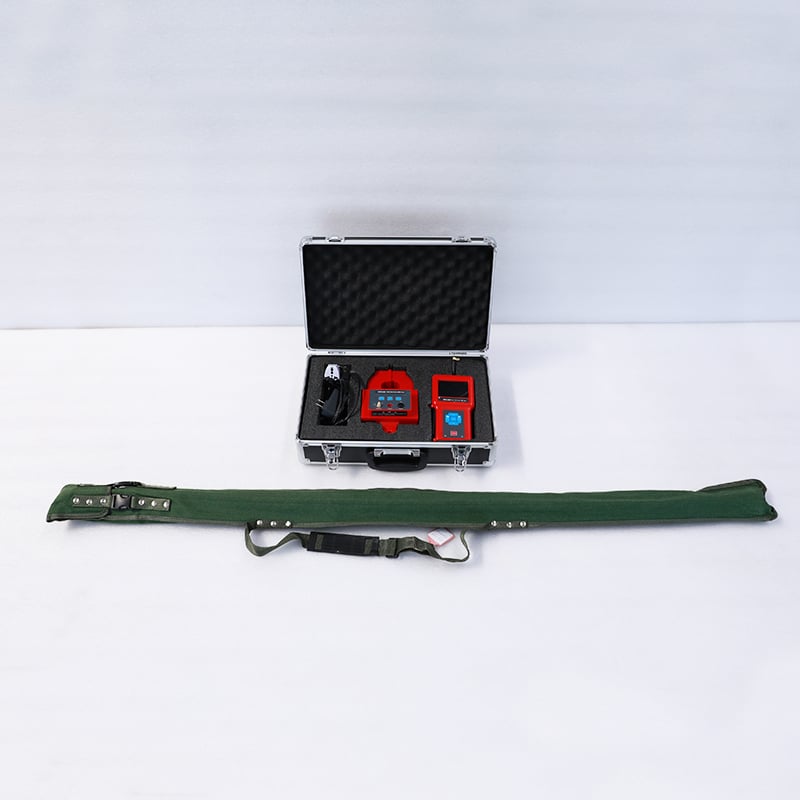
GDYZ-302W Wireless Zinc Oxide Arrester Live Tester
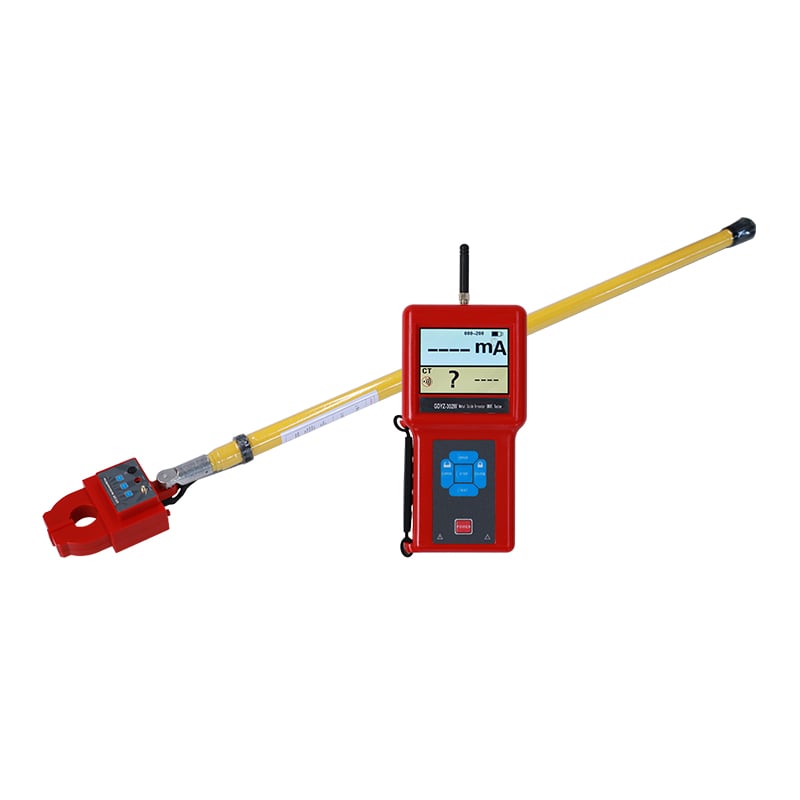
GDYZ-302W Digital Intelligent All-Wireless Zinc Oxide Surge Arrester Live Tester with Clamp-On Current Sensor, 400m Wireless Transmission, Insulating Rod Compatible, for Pole-Mounted Arrester On-Line Detection.
- Description
- Specifications
- Applications
- Advantages
- FAQ
- Recommended Products
Description
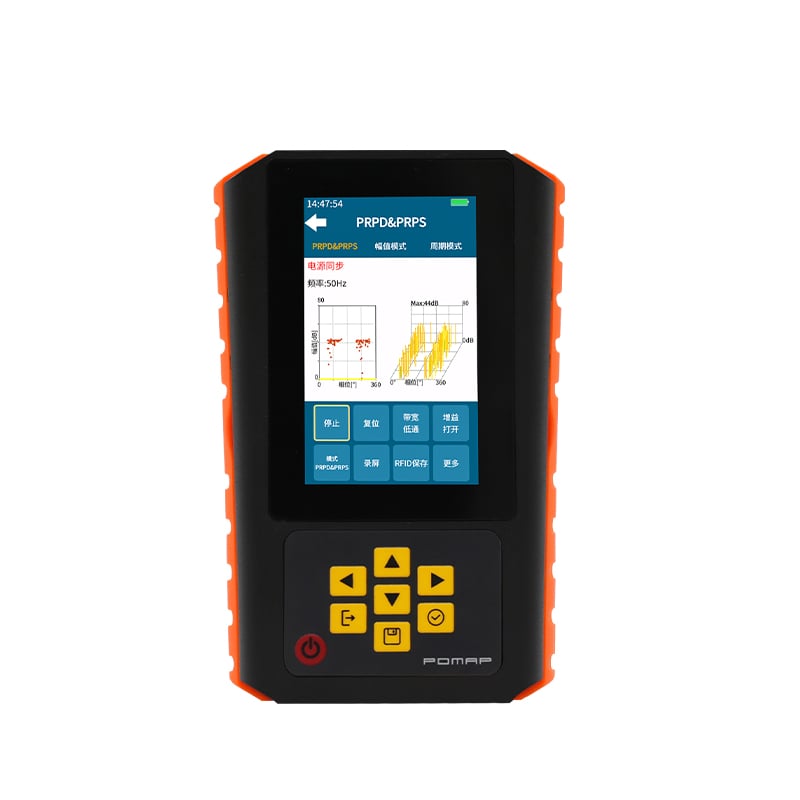
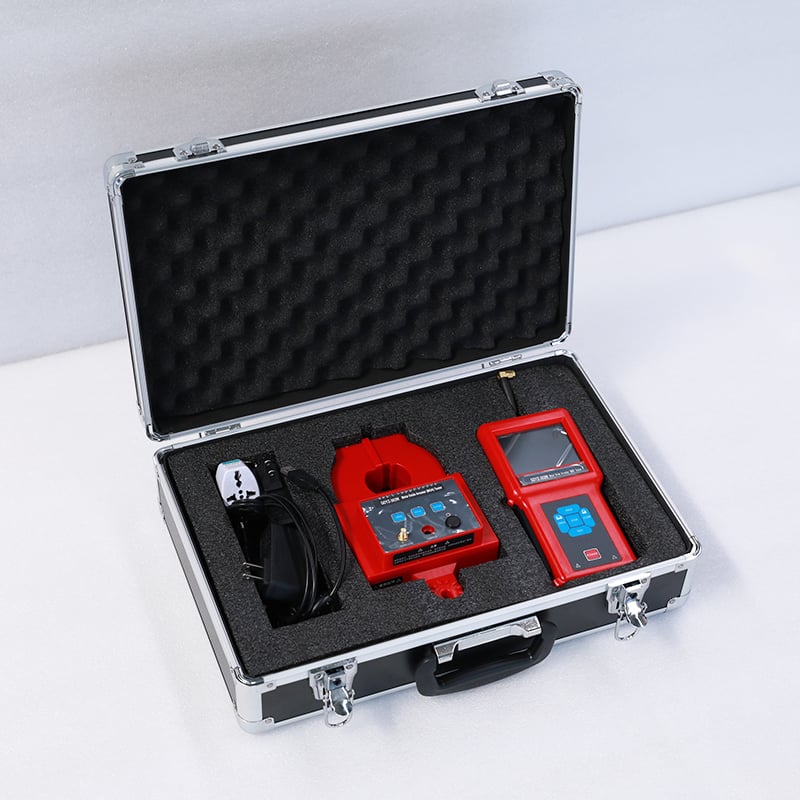
GDYZ-302W is a professional all-wireless zinc oxide surge arrester (MOA) live tester designed for quick on-line detection of pole-mounted and tower-mounted arresters in 10kV~220kV transmission lines, distribution networks and substations. It strictly complies with DL/T 987-2018, GB 11032-2010 and IEC 60099-4:2014 standards, adopting innovative split all-wireless design consisting of a handheld host and a lightweight detector, eliminating the need for climbing poles and long cable laying.
The instrument features high-precision clamp-on current sensor with 0.001mA~300mA ultra-wide measurement range and ±1% industry-leading accuracy, accurately capturing tiny leakage current changes. The 400 meters ultra-long wireless transmission distance allows operators to test arresters safely from the ground. The detector can be directly connected to an insulating rod, enabling non-contact testing of high-altitude arresters without climbing, significantly improving work safety and efficiency.
Specifications
| Parameter | Specification |
|---|---|
| Compliance Standards | DL/T 987-2018, GB 11032-2010, IEC 60099-4:2014, DL/T 474.5-2006 |
| Structure | Split all-wireless design (handheld host + detector) |
| Wireless Transmission Distance | ≥400 meters (open area, unobstructed) |
| Insulating Rod Interface | Φ32mm standard interface |
| Current Measurement Range | 0.000mA ~ 300mA AC (True RMS) |
| Current Resolution | 1μA (0-1mA); 0.01mA (1-10mA); 0.1mA (10-100mA); 1mA (100-300mA) |
| Current Accuracy | ±1% reading ± 8 digits (23℃±5℃, below 80%RH) |
| Voltage Reference Modes | Wireless PT reference, no-PT software reference, manual voltage input |
| Measurement Parameters | Full current, resistive current (fundamental + 3/5/7 harmonics), capacitive current, phase difference, power consumption |
| Waveform Display | Real-time voltage and current waveform display |
| Display | 5-inch 800×480 color capacitive touch screen |
| Language Support | Chinese / English bilingual |
| Data Storage | 1000 groups (with time stamp, parameters and waveforms) |
| Communication Interface | USB 2.0 (U-disk export) |
| Power Supply | Host: 7.4V/2000mAh lithium battery; Detector: 7.4V/2600mAh lithium battery |
| Battery Life | ≥4 hours continuous working time |
| Charging Time | ≤4 hours |
| Operating Temperature | -10℃ ~ +50℃ |
| Humidity | ≤85% RH (non-condensing) |
| Host Dimensions (L×W×H) | 210×140×60mm |
| Detector Dimensions (L×W×H) | 180×120×50mm |
| Weight | Host: ~1.2kg; Detector: ~0.8kg |
| Enclosure | ABS+PC engineering plastic with rubber protective cover |
Applications
Core Test Objects
- Pole-mounted arresters: 10kV~35kV distribution line pole-mounted zinc oxide arresters
- Tower-mounted arresters: 110kV~220kV transmission line tower-mounted zinc oxide arresters
- Substation arresters: Indoor and outdoor zinc oxide arresters in substations
- Other equipment: Lightning protection arresters in industrial plants, communication base stations and wind farms
Typical Usage Scenarios
- Power companies: Distribution network and transmission line arrester routine patrol inspection, live detection and fault diagnosis
- Transmission line operators: Line arrester regular inspection and performance evaluation
- Substation maintenance teams: Substation arrester quick test and emergency maintenance
- Third-party testing institutions: Arrester certification testing, safety assessment and on-site calibration services
Advantages
Compliance with Latest Industry Standards
Fully meets DL/T 987-2018, GB 11032-2010, IEC 60099-4:2014 → test results are globally recognized
Industry-Leading All-Wireless No-Climbing Design
Insulating rod compatible high-altitude test, no climbing required → eliminates falling hazards and reduces test time by 80%
0-300mA Ultra-Wide Range & ±1% High Accuracy
Covers all types of arresters, 2× higher accuracy than ordinary testers → accurately identifies early hidden defects
400 Meters Ultra-Long Wireless Transmission
Stable communication up to 400 meters, no cable laying required → suitable for long-distance testing in large substations and transmission lines
Dual-Purpose Function
Can be used as both arrester tester and ultra-precision clamp-on leakage current meter → one instrument meets multiple test requirements
FAQ
Q: How does the no-climbing test work?
A: GDYZ-302W's detector is designed with a standard Φ32mm interface that can be directly connected to an insulating rod. Operators only need to extend the insulating rod to clamp the detector on the arrester grounding wire from the ground. The detector will automatically measure the leakage current and transmit the data wirelessly to the handheld host. The entire test process takes less than 1 minute per arrester, no climbing required, ensuring operator safety.
Q: Can it test arresters without PT voltage signal?
A: Yes. GDYZ-302W supports three voltage reference modes:
- Wireless PT reference: Uses wireless PT sampling box to obtain voltage signal
- No-PT software reference: Uses software algorithm to generate virtual voltage reference based on current waveform
- Manual voltage input: Manually input the system voltage for calculation This makes it suitable for various field conditions where PT voltage is unavailable.
Q: How to calibrate the instrument?
A: GDYZ-302W can be calibrated using standard current sources with accuracy not lower than 0.1 class. The calibration procedure is simple and fast:
- Enter the calibration mode in the instrument menu
- Connect the standard current source to the clamp-on sensor
- Input the standard current value
- Follow the prompts to complete the calibration of each range
- The instrument will automatically save the calibration coefficients
The instrument should be calibrated once every 12 months according to national metrology requirements.