 EN
EN

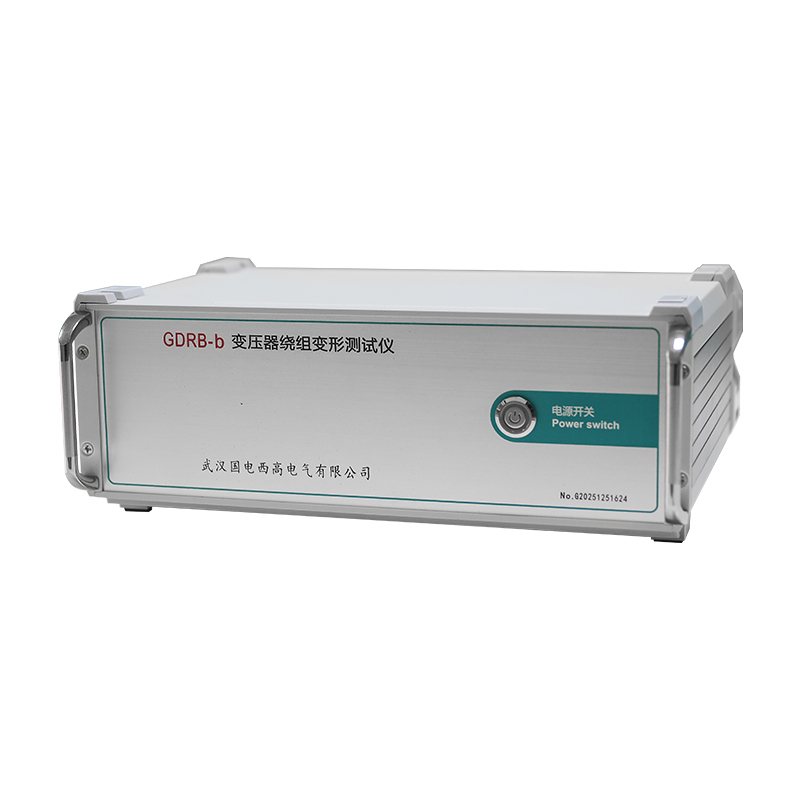
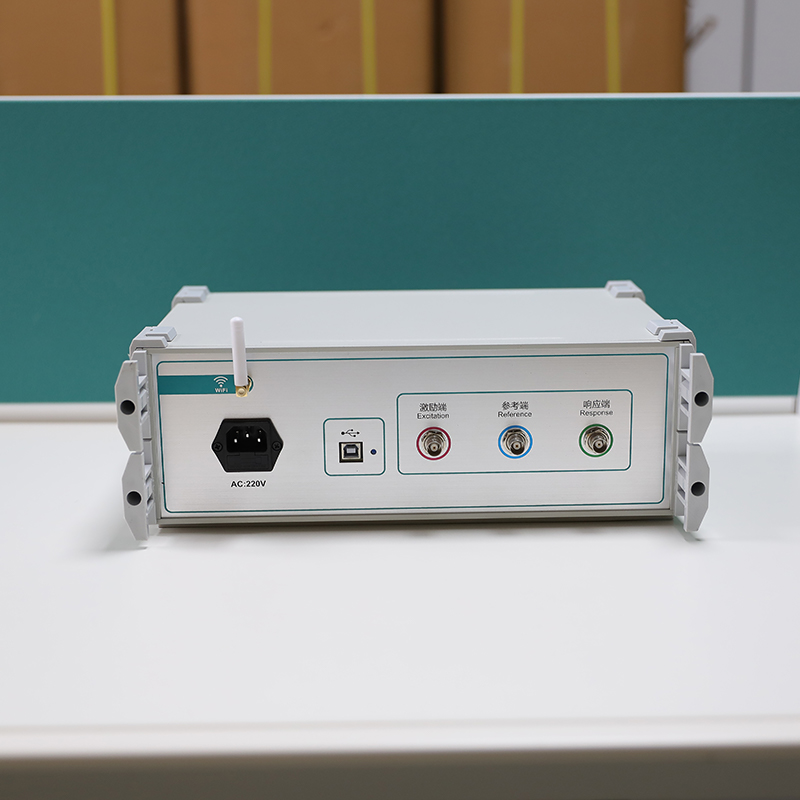
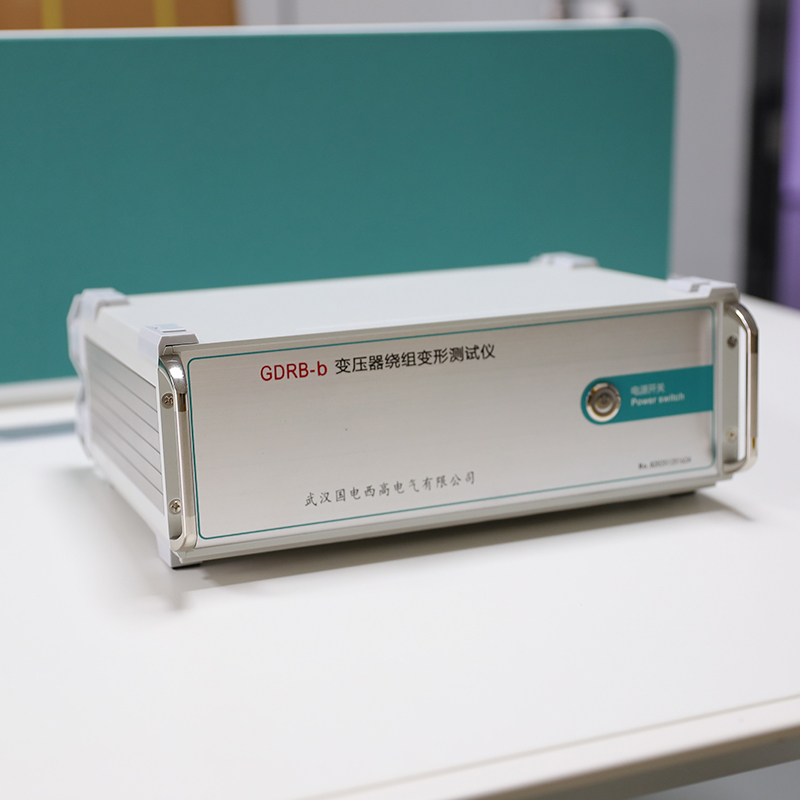
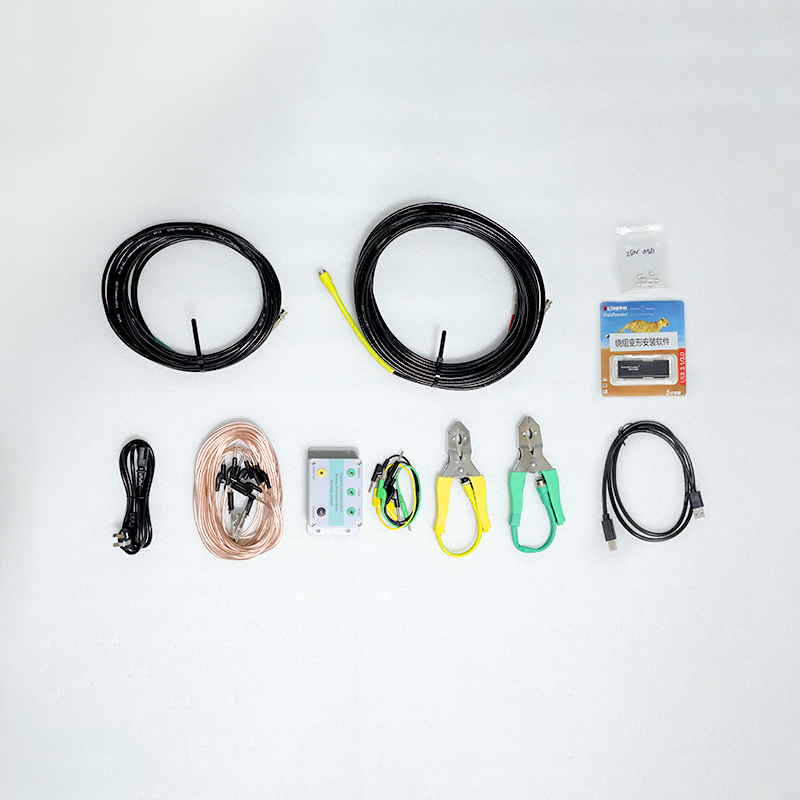
GDRB-B Frequency Response Winding Deformation Tester
GDRB-B Digital Intelligent Transformer Winding Deformation Tester (Frequency Response Analysis) with 10Hz-2MHz Sweep Range, 0.001% Frequency Accuracy, Dual-Channel Synchronous Sampling, Automatic Correlation Coefficient Calculation, Intelligent Deformation Grade Diagnosis, for 6kV-500kV Power Transformer Non-Destructive Winding Deformation Detection.
- Description
- Specification
- Applications
- Advantages
- FAQ
- Recommended Products
Description
The GDRB-B is a professional, non-destructive transformer test instrumentexclusively designed for winding deformation detection of power transformers. It fully complies with DL/T 911-2016, IEC 60076-18:2012 and IEEE Std C57.149-2012 standards, adopting advanced digital synthesized sweep frequency technology and dual-channel synchronous sampling to measure the amplitude-frequency response characteristics of transformer windings without dismantling or lifting the transformer cover.
The instrument works on the principle that each transformer winding has a unique "electrical fingerprint" determined by its inductance, capacitance and resistance distribution. Any mechanical deformation (axial displacement, radial bulging, turn-to-turn short circuit, core loosening) will change these parameters and cause a shift in the frequency response curve. By comparing the current curve with the baseline curve (factory test or previous test), the instrument can accurately determine the type and severity of winding deformation. Equipped with a 7-inch high-resolution color touch screen and intelligent analysis software, it supports automatic correlation coefficient calculation and deformation grade diagnosis. With a built-in 7.4V/10Ah large-capacity lithium battery, it can work continuously for more than 8 hours, making it ideal for on-site testing. Ideal for post-short-circuit fault detection, post-transportation acceptance, preventive maintenance tests, factory acceptance tests and third-party inspection of 6kV-500kV power transformers.
Specification
| Parameter | Specification |
|---|---|
| Sweep Frequency Range | 10Hz – 2MHz |
| Frequency Accuracy | 0.001% |
| Amplitude Measurement Range | -120dB – +20dB |
| Amplitude Accuracy | ±0.1dB |
| Sweep Points | 2000 points (user-adjustable) |
| Sweep Modes | Linear sweep / Logarithmic sweep |
| Test Repeatability | ≥99.5% |
| Sampling Channels | Dual-channel synchronous sampling |
| Output Voltage | ±20V peak (automatic adjustment) |
| Output Impedance | 50Ω |
| Input Impedance | 1MΩ (built-in 50Ω matching resistor) |
| Voltage Isolation | 5000V |
| Diagnosis Method | Correlation coefficient method (DL/T 911-2016) |
| Deformation Grades | Normal / Attention / Abnormal / Severe |
| Comparison Modes | Longitudinal comparison (same phase, different time) / Transverse comparison (different phases, same time) |
| Display | 7-inch high-resolution color touch screen |
| Data Storage | 1000 groups (with time stamp, power-off protection) |
| Data Export | USB interface, PDF/Excel report generation |
| Language Support | Chinese/English bilingual |
| Power Supply | AC 220V±10%, 50Hz + built-in 7.4V/10Ah lithium battery |
| Battery Life | 8 hours continuous operation |
| Charging Time | ~4 hours (full charge) |
| Protection Functions | 5000V voltage isolation, Over-voltage, Over-current, Short-circuit, Reverse polarity, Automatic discharge |
| Dimensions (mm) | 360×290×170 (L×W×H) |
| Weight | ~6kg (including battery) |
| Operating Temperature | -10℃ ~ +50℃ |
| Operating Humidity | ≤90%RH (non-condensing) |
| Altitude | ≤2000m |
| Compliance | DL/T 911-2016, IEC 60076-18:2012, IEEE Std C57.149-2012, GB/T 1094.1-2021 |
Applications
Core Test Objects
- Power transformers: 6kV-500kV oil-immersed power transformers (up to 1000MVA)
- Dry-type transformers: 10kV-35kV dry-type power transformers
- Special transformers: rectifier transformers, furnace transformers, traction transformers
- Distribution transformers: 10kV pole-mounted transformers and box-type transformers
Typical Usage Scenarios
- Post-short-circuit fault detection: mandatory test after transformer suffers near-area short-circuit fault
- Post-transportation acceptance: check for winding deformation caused by transportation vibration
- Preventive maintenance tests: regular inspection of transformer winding condition
- Factory acceptance tests: transformer manufacturer outgoing quality control
- Third-party testing institutions: compliance testing and certification
- Power companies: on-site transformer condition assessment
- Research institutes: transformer fault mechanism research
Advantages
Compliance with International Standards
Fully meets DL/T 911-2016, IEC 60076-18 and IEEE Std C57.149 standards → test results are globally recognized
Non-Destructive Testing
No need to dismantle or lift the transformer cover, no damage to the transformer → saves test time and cost
Ultra-High Sensitivity
Can detect minute winding deformations as small as 1mm → identifies potential faults before they cause serious damage
Fast Test Speed
1–2 minutes per winding, complete three-phase test in less than 10 minutes → improves work efficiency by 80%
Intelligent Automatic Diagnosis
Built-in standard algorithm, automatically calculates correlation coefficient and gives deformation grade → reduces operator skill requirements, eliminates subjective judgment errors
Portable & Long Battery Life
6kg lightweight design with 8-hour battery life → ideal for on-site testing in remote substations and power plants
Comprehensive Data Management
Automatic report generation, USB export and data traceability → eliminates manual recording errors, facilitates historical data comparison
Proven Field Performance
Widely used in power companies and transformer manufacturers worldwide → reliable and trusted performance
FAQ
Q: What is the difference between FRA method and short-circuit impedance method?
A:
- FRA method: Measures the amplitude-frequency response characteristics of windings over a wide frequency range (10Hz-2MHz). It has high sensitivity and can detect minute deformations, but requires baseline curves for comparison.
- Short-circuit impedance method: Measures the low-frequency impedance of windings. It is simple and does not require baseline curves, but has low sensitivity and can only detect severe deformations. GDRB-B uses the FRA method, which is the most widely accepted and sensitive method for winding deformation detection according to international standards.
Q: What types of winding faults can GDRB-B detect?
A: It can detect all common winding mechanical faults including:
- Axial displacement and radial bulging of windings
- Turn-to-turn and disc-to-disc short circuits
- Core loosening and displacement
- Broken clamping structures
- Winding connection problems
- Partial winding collapse
Q: Does the test require the transformer to be powered off?
A: Yes. The transformer must be completely powered off, grounded and discharged (residual voltage <50V) before testing. All external connections should be removed, especially the bushing end screen leads, to eliminate signal interference.
Q: How does the automatic diagnosis function work?
A: The instrument calculates the correlation coefficient between the current test curve and the baseline curve according to DL/T 911-2016:
- Correlation coefficient 0.95: Normal
- 0.90–0.95: Attention
- 0.85–0.90: Abnormal
- <0.85: Severe It automatically gives the diagnosis result and generates a standardized test report.
Q: How long does it take to test a three-phase transformer?
A: With the fast test function, it takes 1–2 minutes per winding and less than 10 minutes to complete the test of all three phases of a transformer, including wiring and data processing.