 EN
EN

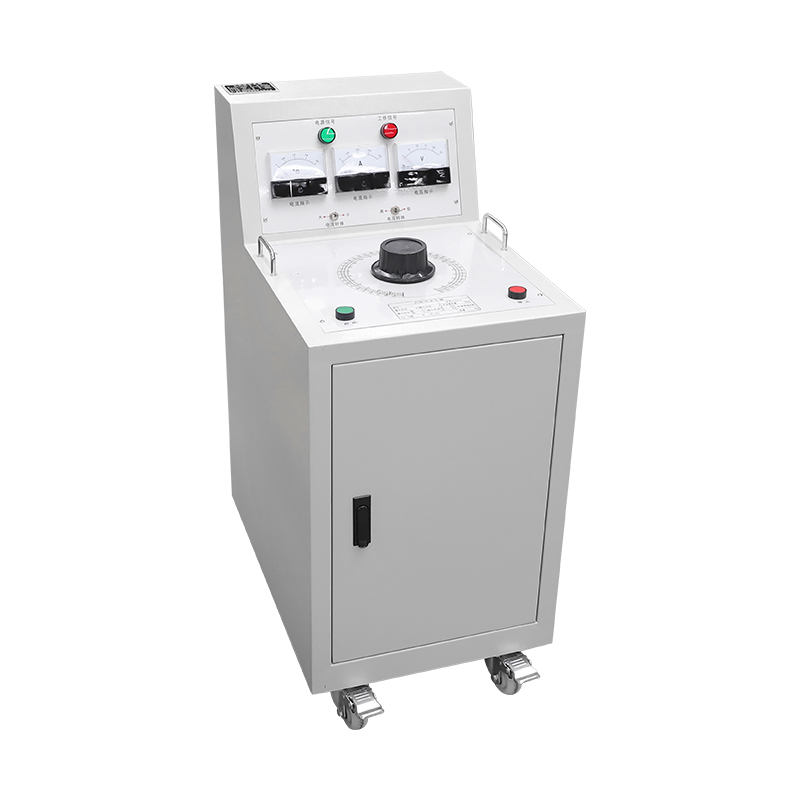
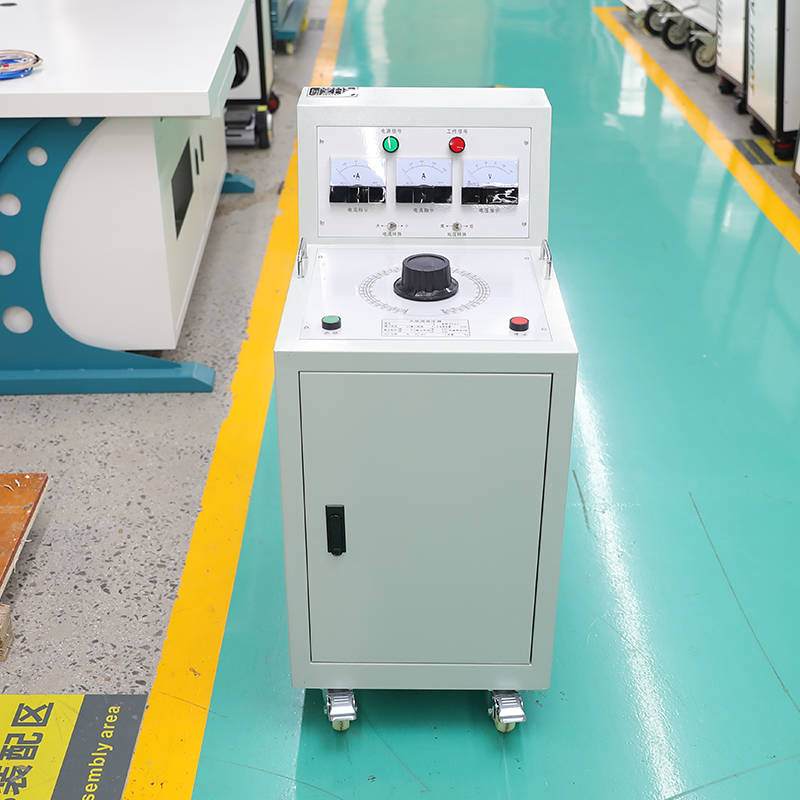
HPCI-M-2000A 2000A Pointer-Type Primary Current Injector
HPCI-M-2000A Analog Pointer-Type Power Frequency Large Current Generator with 12kVA Capacity, 0-2000A Continuously Adjustable, Intermittent Duty, for Low-Voltage Electrical Equipment Temperature Rise and Action Characteristic Test.
- Description
- Specifications
- Applications
- Advantages
- FAQ
- Recommended Products
Description
HPCI-M-2000A is a professional pointer-type power frequency large current generator (primary current injector) designed for temperature rise test, action characteristic verification and ratio calibration of low-voltage electrical equipment in switchgear factories, busbar manufacturers, power substations, electrical repair workshops and third-party testing institutions. It strictly complies with DL/T 848.2-2018, GB 7251.1-2013 and IEC 60947-1 standards, adopting high-quality silicon steel sheet transformer core + epoxy resin casting structure that provides stable sine wave output and reliable performance in continuous high-current operation.
The instrument delivers 0~2000A continuously adjustable AC output with 6V open circuit voltage and Class 1.5 measurement accuracy, covering most low-voltage switchgear and busbar test requirements. Its high-precision pointer analog ammeter features intuitive reading and strong anti-electromagnetic interference performance, especially suitable for strong electromagnetic field environments during high-current tests. Both integrated and split structures are available to meet different on-site layout and transportation needs. The device adopts intermittent duty cycle design with built-in over-current, over-heat and short-circuit protection, ensuring safe and stable operation.
Specifications
| Parameter | Specification |
|---|---|
| Compliance Standards | DL/T 848.2-2018, GB 7251.1-2013, GB/T 14048.1-2012, IEC 60947-1:2020 |
| Rated Capacity | 12kVA |
| Input Power Supply | AC 220V / 380V ±10%, 50Hz ±2Hz, single phase |
| Input Current | ~54A (380V input) |
| Output Current Range | 0 ~ 2000A AC, continuously adjustable |
| Open Circuit Voltage | 6V AC |
| Output Waveform | Standard sine wave, THD <5% |
| Measurement Accuracy | Class 1.5 (full scale) |
| Display Mode | High-precision pointer analog ammeter |
| Duty Cycle | Intermittent: 5min ON / 5min OFF at rated current (cycle operation) |
| Structure Type | Integrated type / split type (optional) |
| Voltage Regulation Mode | Contact type voltage regulator, manual adjustment |
| Protection Functions | Over-current, over-heat, short-circuit, zero-position start |
| Cooling Method | Forced air cooling with axial fan |
| Insulation Grade | Class F |
| Operating Temperature | -10℃ ~ +40℃ |
| Humidity | ≤85% RH (non-condensing) |
| Altitude | ≤1000m |
| Overall Dimensions (Integrated) | 530 × 640 × 930mm (L×W×H) |
| Total Weight (Integrated) | ~110kg |
| Enclosure | Cold-rolled steel spray cabinet with casters |
Applications
Core Test Objects
- Switching devices: Molded case circuit breakers, air circuit breakers, contactors, fuses, relays
- Busbar & switchgear: Low-voltage busbars, bus ducts, distribution cabinets, switchgear assemblies
- Instrument transformers: Current transformers (CT), current transformers for metering and protection
- Other components: Busbar connectors, cable terminals, conductive parts of electrical equipment
Typical Usage Scenarios
- Electrical equipment factories: Production line temperature rise test of circuit breakers and busbars, finished product quality inspection, factory test
- Switchgear manufacturers: Busbar temperature rise verification, protection device action characteristic test, type test assistance
- Power substations: On-site CT ratio verification, switchgear preventive test, equipment acceptance inspection
- Electrical repair workshops: Rewound motor and transformer current test, repaired equipment performance verification
- Third-party testing institutions: Electrical product safety certification, quality inspection and calibration services
Advantages
Compliance with International & Industry Standards
Fully meets DL/T 848.2, GB 7251.1, IEC 60947-1 → test results comply with electrical product quality standards and power test specifications
Pointer-Type Anti-Interference Measurement
Analog pointer direct reading, strong resistance to strong electromagnetic interference → stable and reliable reading in high-current test environment, no digital flicker or drift
Smooth & Stable Large Current Output
High-quality voltage regulator + silicon steel core transformer → uniform current rise, small waveform distortion, good test repeatability
Flexible Structure Options
Integrated / split structure optional → meets both laboratory fixed test and on-site mobile test requirements
Comprehensive Safety Protection
Zero-position start + over-current + over-heat + short-circuit protection → eliminates operation risks and ensures equipment and personnel safety
Cost-Effective & Durable
Simple structure, low failure rate, easy maintenance → affordable price, suitable for batch configuration in factories and maintenance teams
FAQ
Q: What is the main use of a large current generator (primary current injector)?
A: Large current generators are mainly used to inject power frequency large current into electrical equipment to complete temperature rise test, action characteristic test and ratio calibration. Typical applications include verifying temperature rise of busbars and switchgears, testing tripping characteristics of circuit breakers, calibrating transformation ratio and error of current transformers, and testing current carrying capacity of conductive components.
Q: Why does the device adopt intermittent duty instead of continuous operation?
A: Generating large current will produce a lot of Joule heat inside the transformer and conductors. Long-time continuous rated operation will cause overheating and damage the insulation. The 5min ON / 5min OFF intermittent cycle design fully meets the requirements of conventional electrical tests (most temperature rise and action tests are completed within a few minutes), while ensuring equipment safety and service life. For long-time continuous operation requirements, water-cooled high-current generators can be selected.
Q: What are the advantages of pointer-type compared with digital display?
A: In strong electromagnetic field environment of high-current test, digital meters are prone to numerical flicker, drift and even damage due to electromagnetic interference. Pointer analog meters have strong anti-interference ability, stable and intuitive reading, and can also observe the trend of current change through pointer swing, which is more suitable for on-site high-current test scenarios.
Q: What is the difference between integrated and split structure?
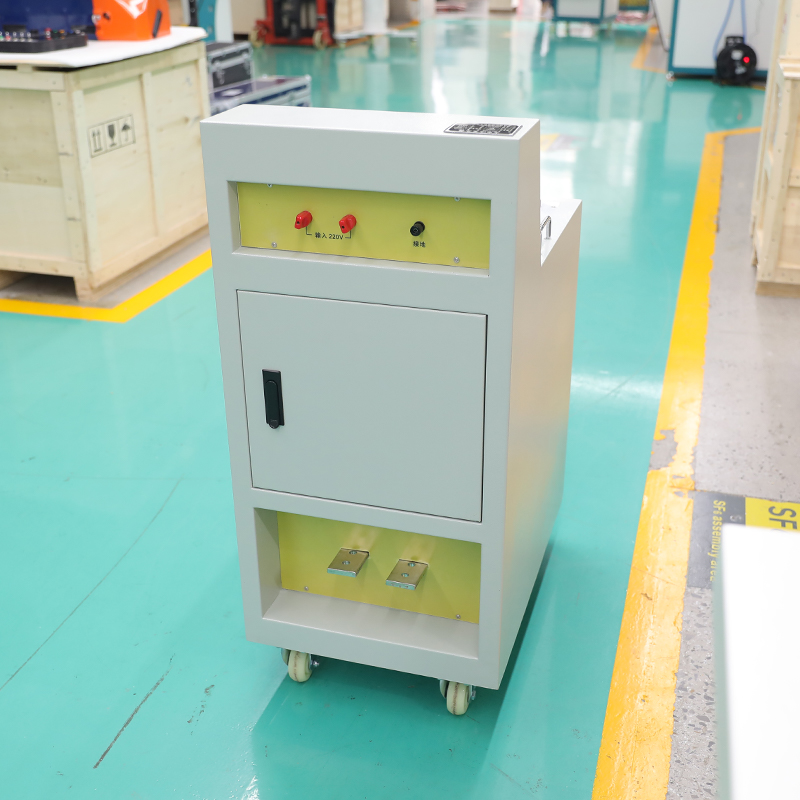
A: The integrated structure integrates the control unit and the current boosting transformer into one cabinet, which is convenient for fixed placement in the laboratory and overall movement. The split structure separates the control box from the current booster body, which is more flexible for on-site wiring, can reduce the occupation of test space, and is convenient for transportation and handling in sections. Users can choose according to actual use scenarios.