 EN
EN

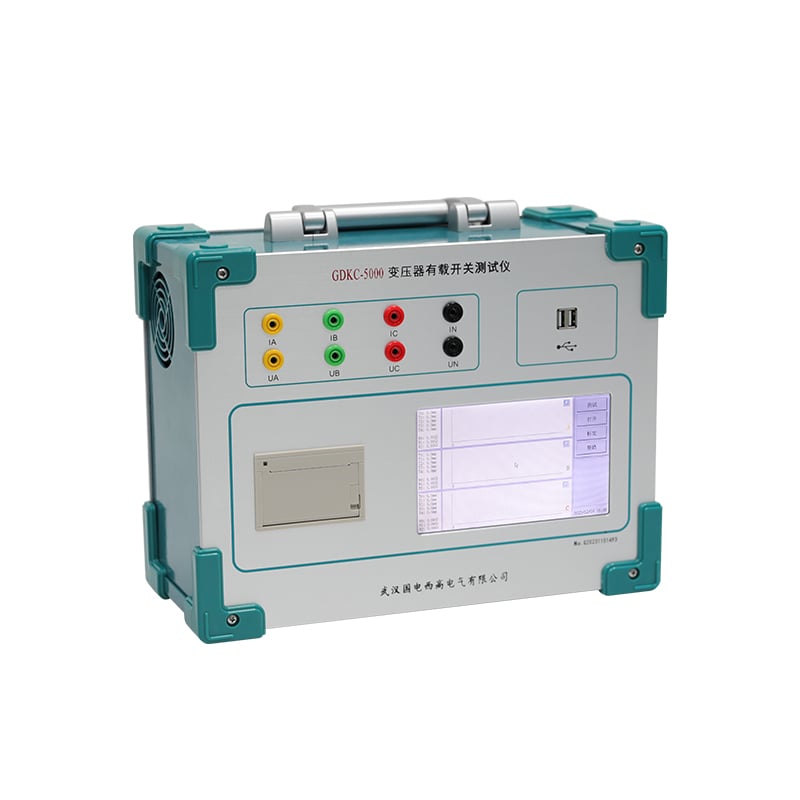
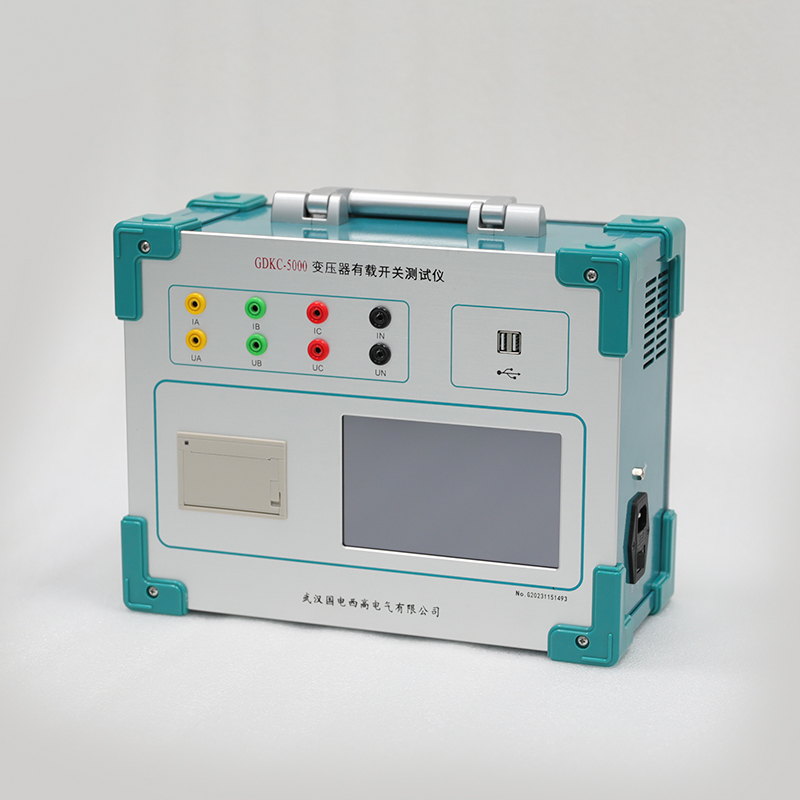
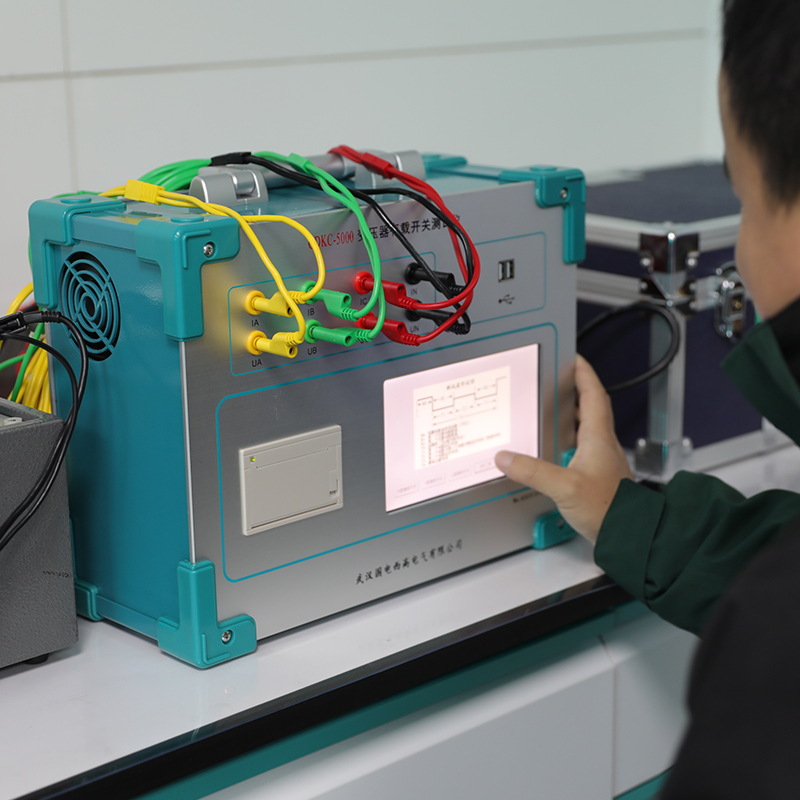
GDKC-5000 Transformer On-Load Tap Changer Tester
GDKC-5000 Digital Intelligent AC/DC Universal Transformer On-Load Tap Changer Tester with Three-Phase Independent Constant Current Source, High-Speed Waveform Acquisition, Built-in Fault Analysis Algorithm, for On-Site OLTC Electrical Characteristic Measurement.
- Description
- Specifications
- Applications
- Advantages
- FAQ
- Recommended Products
Description
The GDKC-5000 is a professional-grade, classic AC/DC universal on-load tap changer (OLTC) testerexclusively designed for on-site electrical characteristic testing and fault diagnosis of OLTCs in power transformers and special transformers in power systems, transformer manufacturing and industrial enterprises. It fully complies with DL/T 846.8-2017, GB/T 10230.1-2019 and IEC 60214-1:2019 standards, adopting advanced high-speed waveform analysis technology that eliminates the need to lift the transformer core or disassemble the OLTC, enabling direct on-site testing without power outage or equipment disassembly.
The instrument features an innovative three-phase independent constant current source design that supports both with-winding and without-winding test modes, adapting to various transformer winding connections (Y, △, YN). The four-terminal measurement method eliminates the influence of lead resistance, ensuring accurate measurement of transition resistance without additional compensation. Its 30kHz high-speed synchronous sampling system with 0.1ms ultra-high time resolution captures the complete dynamic process of OLTC switching, including subtle changes in transition waveform and contact bounce. The built-in intelligent waveform analysis algorithm automatically identifies common OLTC faults such as transition resistor breakage, poor contact, excessive bridging time and asynchronous switching.
Specifications
| Parameter | Specification |
|---|---|
| System Parameters | |
| Compliance Standard | DL/T 846.8-2017, GB/T 10230.1-2019, IEC 60214-1:2019, DL/T 596-2021 |
| Test Principle | High-speed waveform analysis method (AC/DC universal) |
| Test Modes | With-winding test / Without-winding test |
| Winding Connections | Y, △, YN |
| Operation Mode | One-click fully automatic test / Manual test |
| Display | 7-inch 800×480 color capacitive touch screen |
| Language Support | Chinese / English bilingual |
| Data Storage | 1000 groups test data + waveforms |
| Communication Interface | USB 2.0 (data export) |
| Report Generation | One-click Word format report |
| Electrical Parameters | |
| Output Current | 3A/1A, 0.6A/0.2A selectable |
| Open Circuit Voltage | 24V DC maximum |
| Current Ripple | ≤0.1% |
| Measurement Performance | |
| Transition Resistance Range | 0.4Ω ~ 20Ω (1A gear), 10Ω ~ 100Ω (0.2A gear) |
| Resistance Accuracy | ±(5% of reading + 0.1Ω) |
| Transition Time Range | 0 ~ 300ms |
| Time Resolution | 0.1ms |
| Time Accuracy | ±0.1ms |
| Synchronization Accuracy | ±0.1ms |
| Sampling Rate | 30kHz synchronous sampling (3 channels) |
| Waveform Record Length | 300ms |
| Power Supply | |
| Input Power | AC 220V±15%, 50Hz±1Hz |
| Power Consumption | ≤30W (average), ≤100W (peak) |
| Physical Parameters | |
| Main Unit Dimensions | 360×260×150mm (L×W×H) |
| Cable Box Dimensions | 360×260×150mm (L×W×H) |
| Main Unit Weight | ~6kg |
| Cable Box Weight | ~4kg |
| Total Weight | ~10kg |
| Housing | Rugged aluminum alloy chassis |
| Protection Grade | IP54 |
| Operating Temperature | -10℃ ~ +50℃ |
| Storage Temperature | -20℃ ~ +60℃ |
| Humidity | ≤85% RH (non-condensing) |
| Altitude | ≤2000m (customizable for higher altitudes) |
Applications
Core Test Objects
- On-Load Tap Changers: ABB, Siemens, Schneider, MR, Xi'an XD and other domestic and international mainstream OLTC models
- Power Transformers: 10kV ~ 1000kV oil-immersed power transformers, distribution transformers and special transformers
- Voltage Regulators: On-load voltage regulators, step voltage regulators
Typical Usage Scenarios
- Power companies: Substation preventive maintenance, OLTC regular inspection, fault diagnosis and analysis
- Transformer manufacturers: Factory quality control, batch production inspection, type test verification
- Power plants: Generator transformer OLTC test, auxiliary equipment transformer inspection
- Industrial enterprises: Internal transformer maintenance, OLTC routine testing
- Third-party testing institutions: Transformer certification testing, on-site calibration services
Advantages
Compliance with Latest International Standards
Fully meets DL/T 846.8-2017 Chinese industry standard, GB/T 10230.1-2019 national standard and IEC 60214-1 international standard → test results are recognized by certification bodies worldwide
Industry-Leading No Core Lifting Testing
Eliminates the need to lift the transformer core or disassemble the OLTC, reducing test time by 90% and avoiding mechanical adjustment after reassembly → the only practical solution for on-site OLTC testing
AC/DC Universal & Dual Test Modes
Supports both AC and DC test methods, as well as with-winding and without-winding test modes → adapts to all types of transformers and OLTC models, no need for multiple test instruments
High-Precision & Accurate Measurement
Four-terminal measurement method, 30kHz high-speed sampling, 0.1ms time resolution → accurately captures subtle changes in OLTC switching process, identifies early hidden faults
Built-in Intelligent Fault Analysis Algorithm
Automatically identifies common OLTC faults and provides diagnostic suggestions → eliminates the need for professional analysts, reduces operator skill requirements
Comprehensive Data Management & Report Generation
1000 groups data storage, USB export and one-click Word report generation → simplifies data analysis and report writing, reduces operator workload
FAQ
Q: What is the waveform analysis method and how does it work?
A: The waveform analysis method is the international standard quantitative testing method for OLTC electrical characteristics. It works by applying a constant current or voltage across the OLTC contacts during switching. The voltage and current waveforms during the switching process are recorded at high speed, and the transition resistance, transition time, three-phase synchronization and other parameters are calculated by analyzing the waveform changes. This method can accurately capture subtle changes in the switching process and identify early hidden faults that cannot be detected by traditional methods.
Q: What is the difference between with-winding and without-winding test modes?
A:
- Without-winding test: The OLTC is tested separately after being disassembled from the transformer. It provides the most accurate measurement results but requires core lifting and switch disassembly, which is time-consuming and labor-intensive.
- With-winding test: The OLTC is tested directly on the transformer without disassembly. It is fast and convenient, but the measurement results are affected by the transformer winding resistance. GDKC-5000 adopts advanced compensation algorithm to eliminate the influence of winding resistance, ensuring accurate measurement results even in with-winding mode.
Q: What common OLTC faults can GDKC-5000 identify?
A: GDKC-5000 can automatically identify the following common OLTC faults by analyzing the transition waveform:
- Transition resistor breakage: Abnormal waveform with infinite resistance during transition
- Poor contact: Fluctuating resistance waveform and increased contact bounce
- Excessive bridging time: Longer than standard transition time
- Asynchronous switching: Large time difference between three-phase switching
- Contact wear: Increased transition resistance and bounce time
- Spring fatigue: Decreased switching speed and increased transition time
Q: How to calibrate the instrument?
A: GDKC-5000 can be calibrated using standard resistors and standard time generators with accuracy not lower than 0.2 class. The calibration procedure is simple and fast:
- Enter the calibration mode in the instrument menu
- Follow the prompts to connect the standard resistor and standard time generator
- Complete the calibration of resistance and time parameters
- The instrument will automatically save the calibration coefficients
The instrument should be calibrated once every 12 months according to national metrology requirements.