 EN
EN

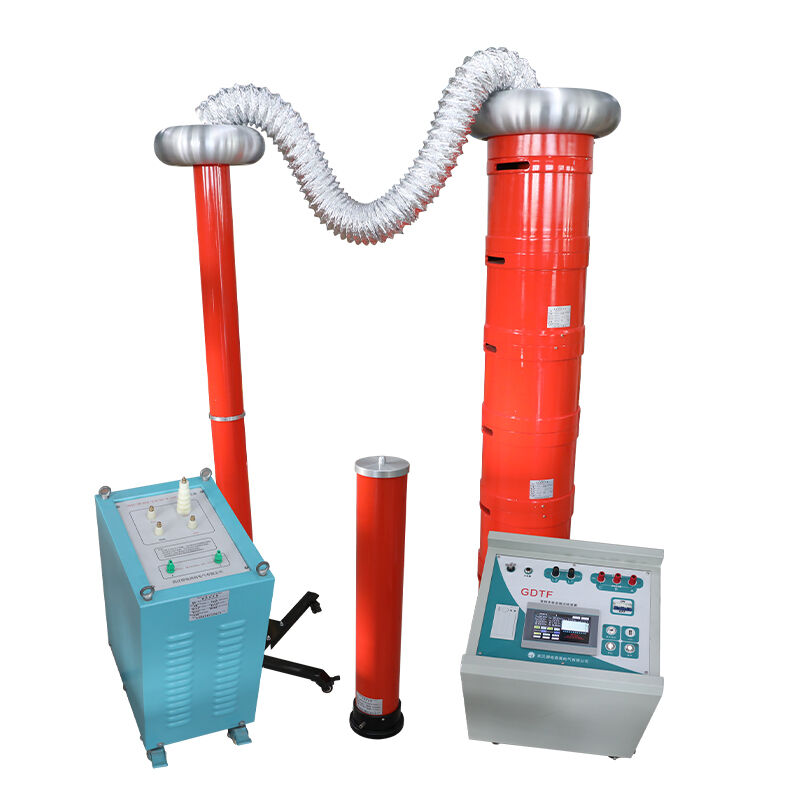
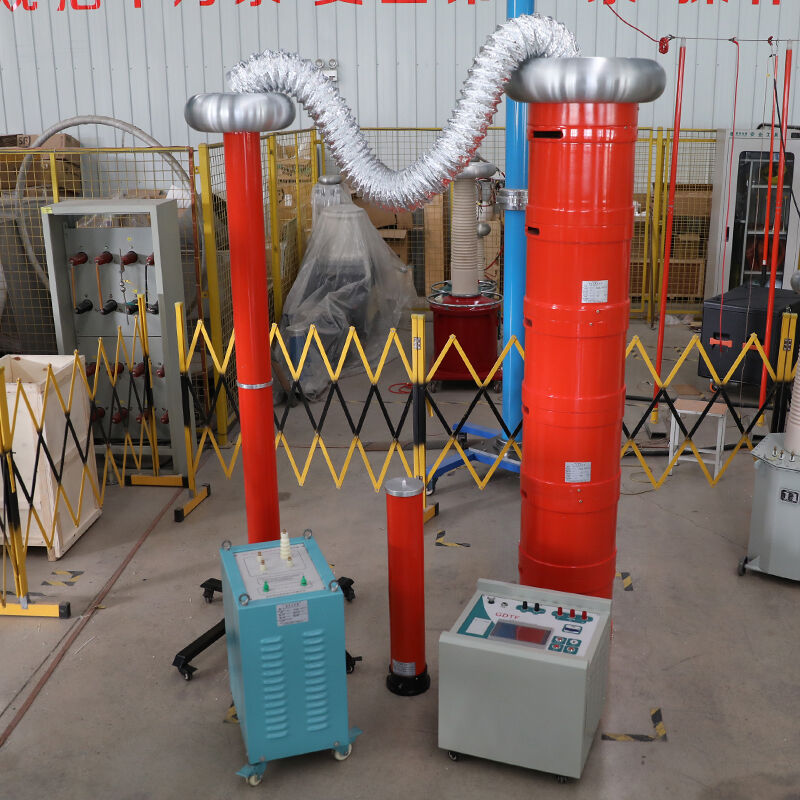
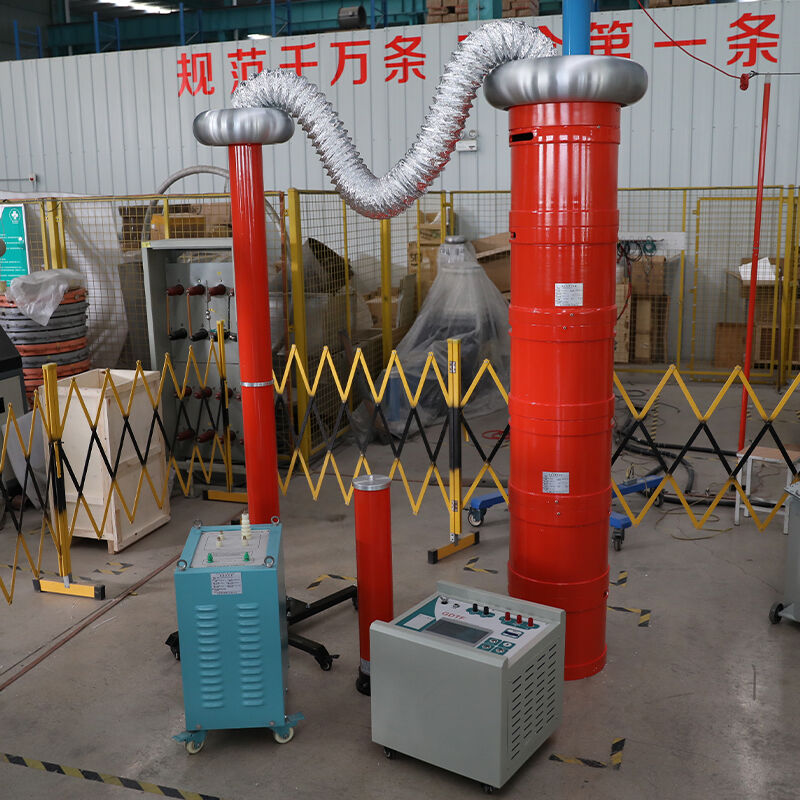
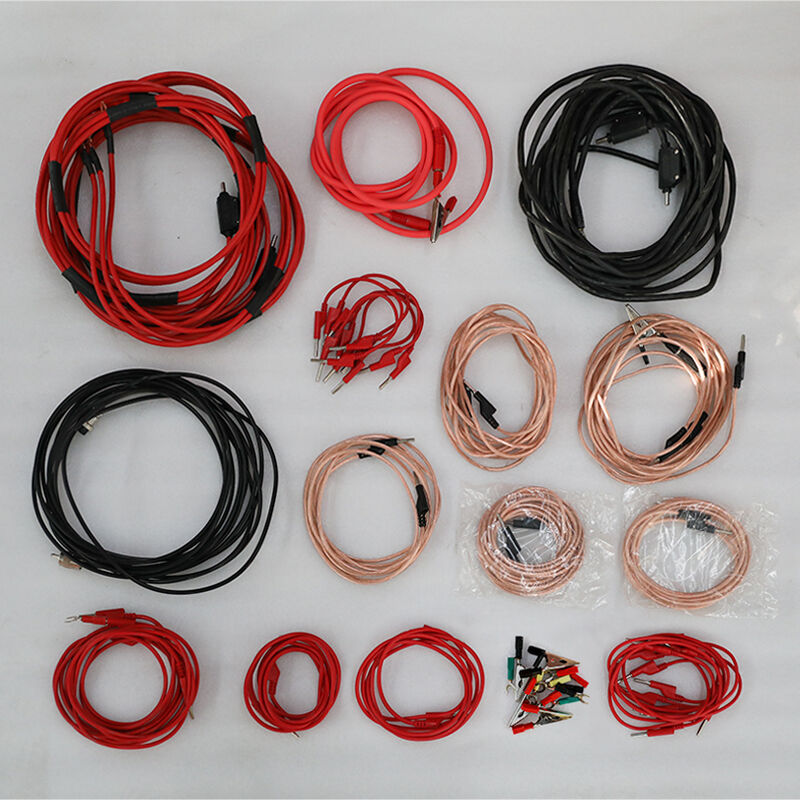
GDTF-540kVA/270kV Variable Frequency Series Resonance Test Set
GDTF-540kVA/270kV variable frequency series resonant hipot tester with combinable dry-type reactors, 30-300Hz adjustable frequency, Q≥30, full safety protection, ideal for AC withstand test of 10/35/110kV XLPE cable, GIS and transformer, meets IEC60060-1 & DL/T849.6-2016.
- Description
- Specifications
- Applications
- Advantages
- FAQ
- Recommended Products
Description
The GDTF-540kVA/270kV is a high-capacity modular variable frequency series resonance withstand voltage system specially developed for global substation acceptance & preventive maintenance tests. Based on LC series resonance principle, it generates high test voltage with low input power by adjusting working frequency from 30Hz to 300Hz, largely reducing equipment weight compared with traditional high voltage test transformers.
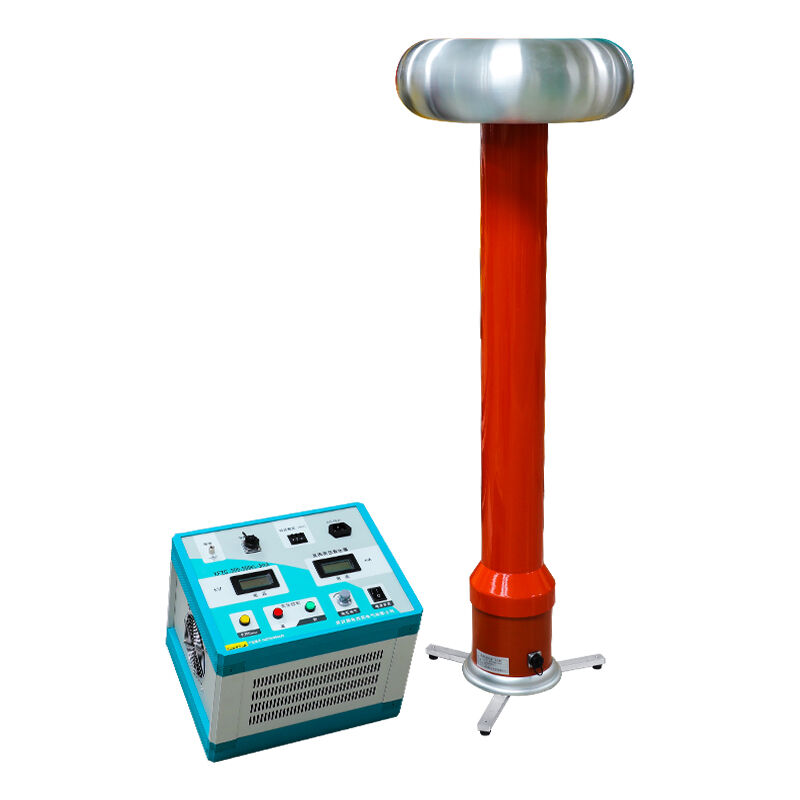
This complete unit consists of DSP digital variable frequency control cabinet, excitation transformer, multiple dry epoxy cast modular reactors and 270kV capacitive voltage divider. All reactors can be flexibly connected in series or parallel to achieve multiple output grades: 27kV/20A, 54kV/10A,135kV/4A,270kV/2A. Equipped with 7-inch industrial touch screen, the device supports fully automatic resonance searching, step-up, dwell timing and auto step-down. In case of sample breakdown or flashover, the system instantly de-resonates and cuts down voltage to zero to avoid secondary insulation damage to expensive test specimens like GIS and high voltage power cables. Widely adopted by power utilities, EPC contractors, third-party testing labs and transformer manufacturers worldwide.
Specifications
| Parameter | Specification |
|---|---|
| Input Power | 3-phase 380V±10%, 50Hz |
| Rated Output Capacity | 540kVA |
| Rated Output Voltage | 0–270kV AC (RMS) |
| Rated Output Current | 2A (6 strings) / 4A (3 strings in 2 parallel pairs) / 6A (2 strings in 3 parallel pairs) / 12A (6 parallel pairs) |
| Reactor Configuration | 6×45kV/2A dry-type epoxy-cast reactors |
| Combination Modes | 45kV/12A, 90kV/6A, 135kV/4A, 270kV/2A |
| Operating Frequency Range | 30Hz–300Hz |
| Frequency Resolution | 0.1Hz |
| Frequency Stability | ≤0.01% |
| System Quality Factor (Q) | ≥30 (typical 30–50) |
| Output Waveform Distortion | ≤1% |
| Voltage Measurement Accuracy | ≤±1.5% F.S |
| Current Measurement Accuracy | ≤±1.5% F.S |
| Test Modes | Automatic test, Manual test, Timed test |
| Timing Range | 0–9999s adjustable |
| Display | 7-inch color touch screen |
| Data Storage | 1000 groups (with time stamp) |
| Data Export | USB flash drive |
| Protection Functions | Zero-start, Over-voltage, Over-current, Flashover, Emergency stop, Ground detection, Over-temperature |
| Continuous Operation Time | 60 minutes at full load |
| Operating Temperature | -10℃ ~ +40℃ |
| Operating Humidity | ≤85%RH (non-condensing) |
| Compliance | DL/T 849.6-2016, GB 50150-2016, GB/T 16927.1-2011, IEC 60060-1, IEC 61010-1 CAT III 1000V |
Applications
Core Test Objects (220kV Substation)
- GIS & gas-insulated switchgear: 220kV GIS, circuit breakers, disconnectors, busbars
- Power transformers: 220kV power transformers and distribution transformers
- XLPE power cables: 220kV cables ≤1km, 110kV cables ≤2km, 35kV cables ≤4km, 10kV cables ≤8km
- Bushings & insulators: 220kV transformer bushings, post insulators, suspension insulators
- Switchgear & cabinets: 110kV and below medium-voltage switchgear
- Capacitors & reactors: high-voltage power capacitors and reactors
Typical Usage Scenarios
- Substation commissioning: new equipment acceptance tests according to GB 50150-2016
- Preventive maintenance: periodic insulation strength tests
- Power plant testing: generator transformer and auxiliary equipment tests
- Third-party inspection: compliance testing and certification
- Construction site testing: on-site test of newly installed equipment
Advantages
97% Energy Saving vs Traditional Test Transformers
Series resonance principle reduces input power to only 1/Q of output power → small input power, light weight, easy to transport
Flexible Reactor Combination
6-stage 45kV reactors can be connected in series or parallel → one system covers all test requirements from 10kV to 220kV
Automatic Resonance Finding
One-click auto sweep finds resonance point within 30 seconds → eliminates manual tuning, improves test efficiency
Pure Sine Wave Output
Waveform distortion ≤1% → meets strict requirements of national and international standards
Comprehensive Safety Protection
Multiple protection layers + flashover protection → maximum safety for operators and expensive test equipment
Split Lightweight Design
All components <55kg (except reactors) → easy to transport and assemble in remote substations
Compliance with Latest Standards
Fully meets DL/T 849.6-2016 and GB 50150-2016 → ensures regulatory compliance and test result acceptance
FAQ
Q: What is the principle of variable frequency resonant test system?
A: It uses the series resonance principle: adjust the output frequency of the power supply to make the reactor inductance resonate with the test sample capacitance, generating high voltage and large current on the test sample with only a small input power.
Q: What is the difference between resonant test system and traditional test transformer?
A:
- Resonant system: Input power is only 1/Q of output power (Q≥30), light weight, small size, pure sine wave output, no voltage rise effect
- Traditional test transformer: Input power equals output power, heavy, large size, waveform distortion, serious voltage rise effect for capacitive loads
Q: How long does it take to find the resonance point?
A: The automatic frequency sweep algorithm can find the resonance point within 30 seconds for most test samples.
Q: What is the maximum length of 220kV XLPE cable that can be tested?
A: With 2A rated current at 270kV, it can test up to 1km of 220kV/400mm² XLPE power cable, 2km of 110kV/400mm² XLPE power cable, or 8km of 10kV/300mm² XLPE power cable.
Q: Can it be used for both power frequency and variable frequency tests?
A: Yes. The 30–300Hz wide frequency range supports both power frequency (50Hz) and variable frequency (20–300Hz) tests according to different standards.